

Hypoallergenic Cat Litter: Minimizing Allergy Risks at Home
Most American households with cats know the struggle of battling sneezing fits and itchy eyes from litter box dust. For families dealing with cat allergies, finding a truly low-allergen solution can feel impossible. Over 10 percent of American adults report pet allergies, often linked to common litter choices. This guide cuts through common myths about hypoallergenic cat litter and highlights what really matters when minimizing allergy triggers at home.
Table of Contents
- Defining Hypoallergenic Cat Litter And Common Myths
- Major Types Of Hypoallergenic Litter Materials
- How Hypoallergenic Litters Reduce Allergens
- Choosing The Right Litter For Your Home
- Risks, Drawbacks, And Top Mistakes To Avoid
Key Takeaways
| Point | Details |
|---|---|
| Understanding Hypoallergenic Litter | Hypoallergenic litter reduces allergen potential but does not eliminate allergens entirely. Choosing litter designed to minimize dust and using natural ingredients can help manage allergies effectively. |
| Types of Materials | Common hypoallergenic materials include Silica Gel Crystals and Plant-Based Fibers, each offering unique benefits for reducing airborne particles and improving sustainability. |
| Allergen Reduction Techniques | Effective hypoallergenic litters employ strategies such as minimizing dust production and trapping allergens, which are essential for allergy management in homes with pets. |
| Important Selection Criteria | Key factors for choosing hypoallergenic litter include dust level, odor control, and material composition, ensuring a balance between allergy management and environmental responsibility. |
Defining Hypoallergenic Cat Litter and Common Myths
When it comes to managing cat allergies, understanding hypoallergenic products is crucial. Contrary to popular belief, hypoallergenic does not mean allergen-free but rather indicates a reduced potential for triggering allergic reactions. In the context of cat litter, this term suggests materials designed to minimize respiratory irritation and allergic responses.
The myth surrounding hypoallergenic products stems from a misunderstanding of allergen production. All cats produce Fel d 1 protein, the primary allergen found in saliva, skin, and dander. This means no cat litter can completely eliminate allergenic substances, but certain formulations can significantly reduce their impact. Hypoallergenic cat litters typically focus on minimizing dust, reducing tracking, and using materials less likely to generate airborne particles.
Key characteristics of hypoallergenic cat litters include:
- Low dust production
- Natural, non-toxic ingredients
- Minimal fragrance or chemical additives
- Particle sizes that reduce airborne spread
- Materials derived from natural, non-irritating sources
Pro tip: When selecting a hypoallergenic cat litter, always perform a small test area and monitor your personal allergic response before full implementation.
Major Types of Hypoallergenic Litter Materials
Hypoallergenic cat litters have evolved significantly, offering cat owners multiple options to reduce respiratory irritation and minimize allergen exposure. Biobased materials represent a cutting-edge approach to creating more environmentally friendly and allergy-conscious litter solutions, moving beyond traditional sodium bentonite clay formulations.
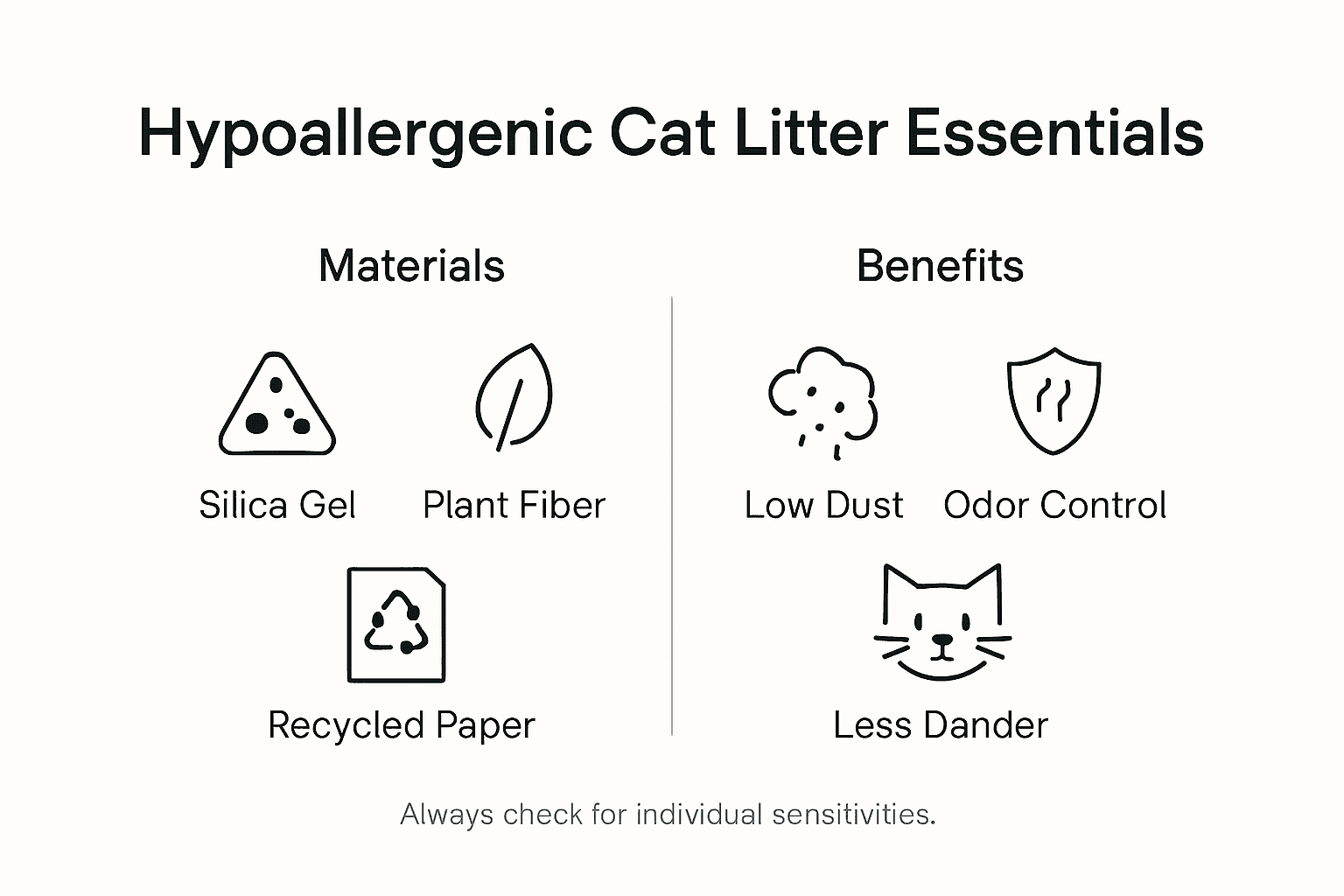
The landscape of hypoallergenic litter materials includes several primary categories designed to address different sensitivities and environmental concerns. Hypoallergenic materials are engineered to reduce allergic reactions by minimizing dust and airborne particles, with key types including:
- Silica Gel Crystals: Highly absorbent and low-dust material
- Plant-Based Fibers: Renewable materials like corn, wheat, and pine
- Recycled Paper: Dust-free and biodegradable option
- Natural Wood Pellets: Dense material that reduces tracking
- Grass Seed: Lightweight and naturally low-dust alternative
Each material offers unique benefits for managing allergies and environmental impact. Silica gel crystals, for instance, excel at moisture absorption and odor control, while plant-based options provide biodegradability and reduced environmental footprint.
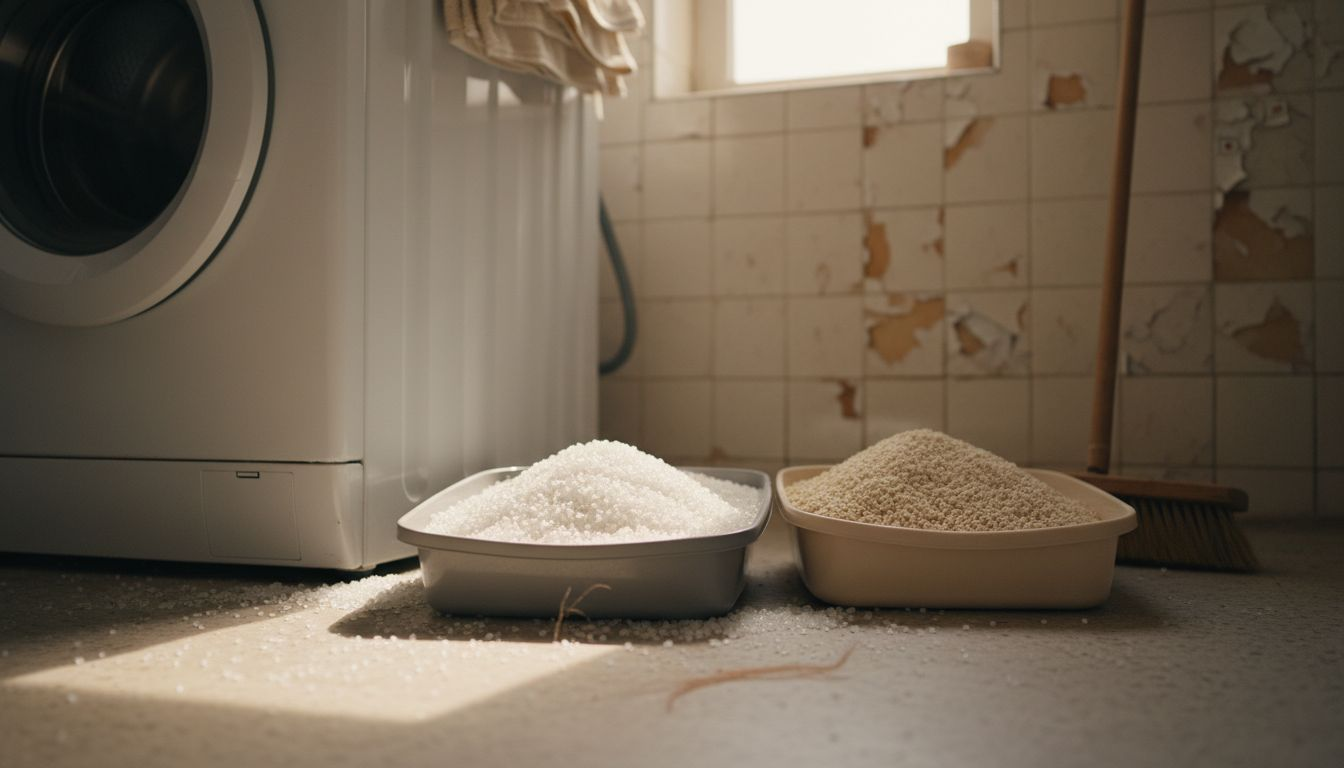
Here’s a comparison of popular hypoallergenic litter materials and their pros and cons:
| Litter Material | Key Advantage | Main Drawback |
|---|---|---|
| Silica Gel Crystals | Superior odor absorption | Not biodegradable |
| Plant-Based Fiber | Renewable and compostable | Can attract pests if not sealed |
| Recycled Paper | Virtually dust-free | Retains less odor than others |
| Natural Wood Pellets | Minimal tracking around home | Larger pellet size may deter cats |
| Grass Seed | Lightweight for easy scooping | May be costlier than alternatives |
Pro tip: Rotate between two different hypoallergenic litter types to help your cat adapt and determine which material provides the best combination of allergen reduction and feline comfort.
How Hypoallergenic Litters Reduce Allergens
Hypoallergenic cat litters work strategically to minimize allergen exposure by addressing the primary sources of feline allergies. The primary goal is to reduce the concentration of Fel d 1 protein, the most common trigger for cat allergies, through innovative material design and advanced trapping mechanisms.
These specialized litters employ multiple techniques to control allergen spread. Low-dust formulations prevent microscopic particles from becoming airborne, while advanced absorption technologies trap dander and protein residues more effectively than traditional litter materials. Comprehensive allergen management involves not just the litter itself, but also creating a controlled environment that limits allergen accumulation.
Key allergen reduction strategies include:
- Minimizing dust generation
- Creating dense particle structures that trap allergens
- Using materials with natural binding properties
- Developing antimicrobial surfaces
- Implementing moisture-control mechanisms that prevent protein buildup
Specific mechanisms of allergen reduction involve:
- Physical trapping of dander particles
- Preventing protein dispersion
- Reducing overall airborne particle concentration
- Creating a barrier against moisture and protein spread
Pro tip: Combine your hypoallergenic litter strategy with weekly litter box deep cleaning and air purification to maximize allergen control in your living space.
Choosing the Right Litter for Your Home
Selecting the perfect cat litter requires careful consideration of multiple factors beyond simple waste management. Balancing allergen reduction with environmental sustainability becomes crucial when choosing a litter that supports both household health and ecological responsibility, making the selection process more complex than simply picking the first option on the shelf.
Allergy sufferers need to evaluate several key characteristics when selecting a hypoallergenic litter. Critical factors include dust production, particle size, moisture absorption, and potential chemical additives that might trigger respiratory sensitivities. The ideal litter should create a minimal dust environment, trap allergens effectively, and provide odor control without introducing additional irritants.
Key evaluation criteria for selecting the right hypoallergenic litter include:
- Dust Level: Ultra-low dust production
- Material Composition: Natural, biodegradable ingredients
- Allergen Trapping: Advanced particle structure
- Odor Management: Effective without chemical fragrances
- Environmental Impact: Sustainable and responsibly sourced
Consider your specific household needs when making a selection. Factors like multiple cat households, severe allergy sufferers, or homes with respiratory conditions might require more specialized litter options that prioritize maximum allergen reduction.
Use this quick reference chart when selecting a hypoallergenic litter:
| Selection Factor | Why It Matters | What to Look For |
|---|---|---|
| Dust Production | Influences allergy severity | Labeled ultra-low dust |
| Odor Control | Affects home environment comfort | Controls ammonia smells |
| Ingredient Source | Impacts both allergies and ecology | Natural, simple materials |
| Allergen Trapping Tech | Determines effectiveness against dander | Advanced particle design |
Pro tip: Purchase small quantities of different hypoallergenic litters to test with your cat, monitoring both feline acceptance and your personal allergy response before committing to a full-size purchase.
Risks, Drawbacks, and Top Mistakes to Avoid
Hypoallergenic cat litters are not a magical solution for completely eliminating allergies, and understanding their limitations is crucial for effective allergy management. Misconceptions about these products can lead to false expectations and inadequate symptom control, potentially causing more frustration for allergy sufferers.
Common mistakes include overrelying on hypoallergenic litters without implementing comprehensive allergen reduction strategies. Allergy management requires a multifaceted approach that goes beyond simply selecting a specialized litter. Homeowners must recognize that no single product can completely eliminate cat-related allergens.
Top mistakes to avoid when managing cat allergies include:
- Assuming all “hypoallergenic” products are truly allergen-free
- Neglecting regular cleaning and home maintenance
- Failing to wash hands after handling litter
- Ignoring overall home ventilation and air quality
- Skipping professional medical advice
Additional risks associated with improper hypoallergenic litter selection involve:
- Potential respiratory irritation from unexpected dust particles
- Chemical sensitivities from artificial additives
- Incomplete allergen trapping
- Increased environmental sensitivity
- Potential digestive issues if cats reject the new litter
Pro tip: Consult with an allergist and conduct a patch test with new litter materials to ensure both your health and your cat’s comfort before making a long-term commitment.
Find the Best Hypoallergenic Cat Litter Solutions at Pawfect Picks
Managing cat allergies requires more than just awareness of hypoallergenic materials it calls for trusted products that truly minimize dust and allergens like Fel d 1 protein in your home. If you have faced challenges with respiratory irritation or sensitivity caused by typical cat litters you understand how crucial it is to select ultra-low dust and natural ingredient options that protect both your health and your cat’s comfort.
At Pawfect Picks, we combine over 25 years of veterinary expertise to handpick vet-approved litter products designed to support allergen reduction while ensuring odor control and environmental responsibility. Whether you prefer silica gel crystals, plant-based fibers, or natural wood pellets, our selection emphasizes materials that trap allergens effectively and reduce airborne particles for a cleaner living space.
Start improving your home environment today with hypoallergenic cat litter options that align with your allergy management goals.

Explore our carefully chosen hypoallergenic cat litters at Pawfect Picks and take the next step toward comfort and health. Discover how product reliability and expert selection can make living with cats easier for allergy sufferers. Don’t wait to create a safer, fresher home for you and your feline companions.
Frequently Asked Questions
What is hypoallergenic cat litter?
Hypoallergenic cat litter refers to products designed to minimize allergens and respiratory irritation, reducing the likelihood of triggering allergic reactions in sensitive individuals. They are not completely allergen-free but focus on lowering dust and using non-toxic materials.
How does hypoallergenic litter help reduce allergens at home?
Hypoallergenic litter minimizes allergens by producing less dust, trapping dander and Fel d 1 protein effectively, and using materials that bind allergens naturally. Some litters also have moisture-control features that hinder protein buildup.
What are the different types of hypoallergenic cat litter materials?
Hypoallergenic cat litter materials include silica gel crystals, plant-based fibers (like corn and wheat), recycled paper, natural wood pellets, and grass seed. Each has unique benefits such as odor control, dust reduction, and environmental sustainability.
Can any cat litter be considered truly allergen-free?
No, no cat litter can be deemed completely allergen-free, as all cats produce Fel d 1 protein, the primary allergen. Hypoallergenic litters are designed to reduce allergen levels rather than eliminate them entirely.
Recommended
- Smart Automatic Cat Litter Box – Open-Top Self-Cleaning Design with Ap – Pawfect Picks
- Window-Mounted Cat Hammock Hanging Bed – Aerial Cat Window Seat with C – Pawfect Picks
- 2L Floating Pet Water Bowl – No-Splash, Dust-Proof Design for Clean Wa – Pawfect Picks
- Pawfect Picks
- 7 Expert Tips for Choosing Allergen Free Dog Foods