

Role of Leash Training: Ensuring Safe Urban Walks
Over half of American households in cities face daily stress when walking their dogs on busy streets. Urban life means your pup encounters constant noise, unpredictable traffic, and plenty of distractions. Mastering effective leash training not only cuts down on risky situations but also makes every walk smoother for both of you. Discover smart strategies that turn chaotic city strolls into enjoyable routines, boosting your confidence and your dog’s safety.
Table of Contents
- What Leash Training Means For City Dogs
- Types Of Leash Training And Tools Used
- Urban Safety Challenges And Leash Laws
- Step-By-Step Methods For Effective Training
- Common Leash Issues And How To Prevent Them
- Building Positive Walk Experiences Together
Key Takeaways
| Point | Details |
|---|---|
| Importance of Leash Training | Proper leash training is essential for urban dogs to navigate safely and confidently in complex environments. |
| Training Techniques and Tools | Utilize humane techniques and appropriate equipment to address unique urban challenges and enhance control during walks. |
| Understanding Leash Laws | Familiarize yourself with local leash regulations to ensure compliance and promote safety for both dogs and the community. |
| Building Positive Experiences | Focus on emotional connection and positive reinforcement to transform walks into enjoyable bonding experiences for both owner and dog. |
What Leash Training Means for City Dogs
Leash training is far more than teaching a dog to walk politely—it’s a critical safety skill for urban canines navigating complex environments. In densely populated city settings, proper leash management becomes essential for preventing accidents, managing potential conflicts, and ensuring both dog and owner can move confidently through crowded spaces. Effective leash training helps guardians build confidence with their dogs in unpredictable city surroundings by establishing clear communication and behavioral boundaries.
Urban environments present unique challenges for dogs, including constant sensory stimulation, frequent encounters with other dogs and people, and potential traffic hazards. Leash training transforms these potentially stressful situations into controlled, manageable experiences. By teaching dogs to maintain a relaxed walking posture, respond to subtle cues, and remain calm amid distractions, owners can prevent reactive behaviors that might otherwise lead to dangerous confrontations or uncontrolled pulling.
The core objectives of leash training for city dogs extend beyond simple obedience. Proper leash manners decrease the risk of accidents and keep dogs safely away from traffic, creating a foundation for positive urban interactions. This training involves teaching dogs to walk without pulling, remain focused on their owner despite environmental distractions, and maintain a consistent pace that allows for safe navigation through sidewalks, crosswalks, and public spaces.
Pro tip: Start leash training in quiet environments and gradually introduce more complex urban scenarios, using high-value treats and consistent positive reinforcement to help your dog build confidence and reliable walking skills.
Types of Leash Training and Tools Used
Different leash training techniques and equipment play a crucial role in helping urban dog owners successfully navigate city environments. Urban dog training requires specialized approaches that address the unique challenges of crowded sidewalks, constant distractions, and the need for precise control. The primary goal is to develop a communication system that allows dogs to walk comfortably and safely while remaining responsive to their owner’s guidance.
Training tools vary significantly depending on a dog’s size, behavior, and specific urban walking requirements. Standard equipment includes flat collars, no-pull harnesses, front-clip harnesses, and head halters, each designed to provide different levels of control and comfort. Loose-leash walking techniques can be effectively taught using humane methods that avoid aversive training devices, focusing instead on positive reinforcement and clear communication between dog and owner.
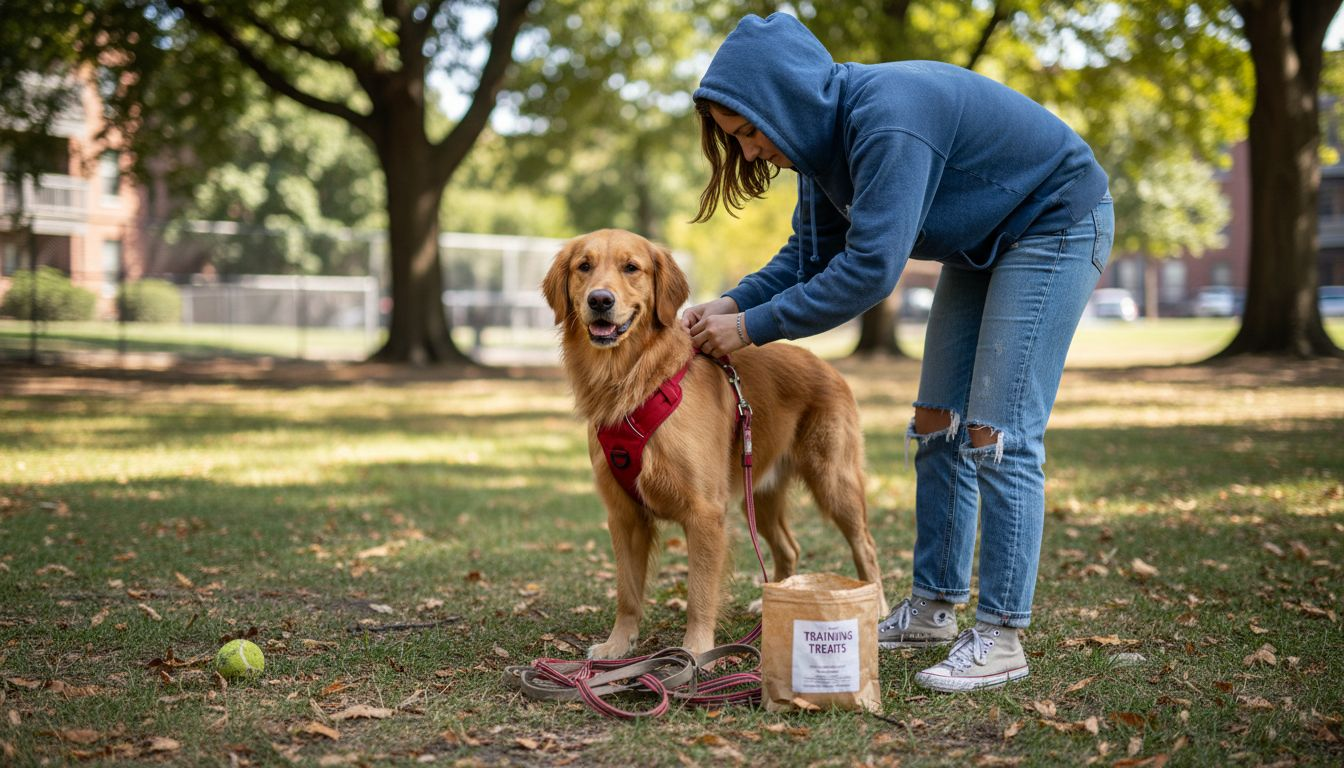
Here’s how common leash training tools compare:
| Tool Type | Level of Control | Dog Comfort | Best For |
|---|---|---|---|
| Flat Collar | Basic | High | Calm walkers |
| No-Pull Harness | Moderate | High | Pullers, city use |
| Front-Clip Harness | Advanced | Moderate | Reducing pulling |
| Head Halter | Maximum | Moderate | Strong pullers |
Urban dog owners typically encounter several primary leash training approaches. The red light/green light method helps dogs learn to stop pulling by immediately halting forward movement when tension occurs. Clicker training provides precise behavioral markers, allowing dogs to understand exactly when they’re exhibiting desired walking behaviors. Additionally, progressive training involves gradually introducing more complex urban environments, starting in quiet areas and slowly increasing distractions to build the dog’s confidence and obedience.
Pro tip: Begin leash training in quiet, controlled environments and progressively introduce more challenging urban scenarios, using high-value treats to reinforce calm, focused walking behaviors.
Urban Safety Challenges and Leash Laws
Urban safety involves complex challenges that directly impact dog owners and their pets in densely populated environments. City landscapes present unique risks including heavy traffic, numerous pedestrians, potential animal encounters, and unpredictable environmental stimuli that require careful navigation. These urban complexities make understanding and adhering to local leash regulations not just a legal requirement, but a critical safety measure for responsible pet ownership.
Leash laws vary significantly across different municipalities, reflecting the specific needs of each urban community. Local regulations typically specify detailed requirements for dog walking, including leash length, designated off-leash areas, and specific owner responsibilities. These laws are designed to protect public safety by preventing potential dog bites, controlling animal behavior in shared spaces, and ensuring peaceful coexistence between pet owners and other city residents.
Navigating urban leash requirements demands proactive awareness and preparation. Dog owners must familiarize themselves with local ordinances, which can differ dramatically between neighborhoods, parks, and public spaces. Some cities enforce strict leash length regulations, typically requiring dogs to remain within 4-6 feet of their owner, while others have more nuanced rules about leash usage in specific zones like public parks, sidewalks, and recreational areas. Understanding these local variations is crucial for avoiding potential fines and ensuring the safety of both pets and surrounding community members.
Here is a quick reference for typical urban leash law differences:
| Regulation Focus | Common Requirement | Why It Matters |
|---|---|---|
| Leash Length | 4–6 feet maximum | Maintains close control |
| Off-Leash Zones | Designated only | Prevents conflicts |
| Owner Duties | Carry clean-up bags | Keeps public areas safe |
| Area Variation | Rules change by location | Avoids unexpected fines |
Pro tip: Always carry a copy of local leash regulations on your smartphone and research specific area requirements before exploring new urban walking routes with your dog.
Step-By-Step Methods for Effective Training
Systematic leash training requires a structured approach that breaks down complex behaviors into manageable steps, helping dogs gradually develop reliable walking skills. The process begins indoors, where distractions are minimal and dogs can focus on learning fundamental walking behaviors. Initial training focuses on creating positive associations with the leash and collar, ensuring the dog views these tools as something enjoyable rather than restrictive.
Training progression involves several critical stages. Practicing consistency in training techniques, including specific walking positions and verbal cues, helps dogs understand expectations. The recommended sequence includes indoor introduction, short controlled outdoor sessions, and gradual exposure to increasingly complex environments. Dog owners should focus on rewarding calm behavior, teaching the ‘let’s go’ command, and maintaining a consistent walking side to build a strong foundation of leash communication.
Successful urban leash training requires patience and incremental skill building. Advanced techniques involve teaching dogs to ignore distractions, maintain a steady pace, and respond to subtle cues. Owners should practice relaxation techniques before walks, use high-value treats for reinforcement, and slowly introduce challenging scenarios like busy sidewalks, other dogs, and unpredictable urban environments. The goal is to create a confident, controlled walking experience that feels natural and enjoyable for both dog and owner.
Pro tip: Start each training session with a calm, focused mindset and keep initial practice sessions short—5 to 10 minutes—to maintain your dog’s engagement and prevent frustration.
Common Leash Issues and How to Prevent Them
Leash walking challenges are common experiences for urban dog owners, requiring strategic intervention and understanding of canine behavior. These issues often emerge from miscommunication, lack of consistent training, or inappropriate equipment selection. Urban environments amplify potential problems, with numerous distractions and stimuli that can trigger reactive behaviors in dogs attempting to navigate crowded sidewalks and busy streets.
Pulling behaviors represent one of the most frequent leash training obstacles. Dogs naturally explore their environment and can become overstimulated, leading to tension and uncontrolled movement. Effective prevention strategies focus on rewarding calm behavior and establishing clear communication boundaries, which help dogs understand expected walking protocols. Techniques like stopping forward movement when pulling occurs, using consistent verbal cues, and practicing structured walking can gradually reshape these problematic walking patterns.
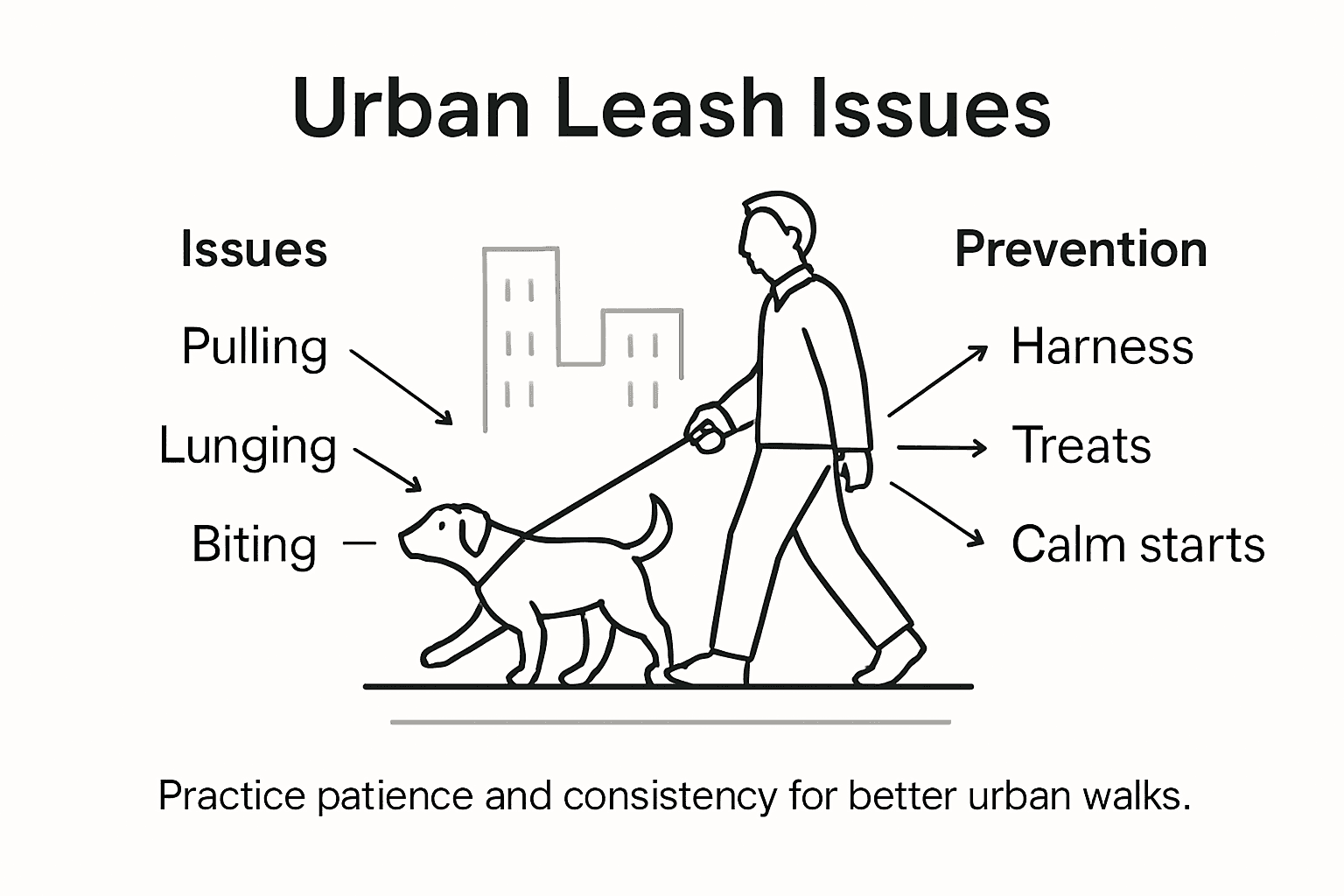
Beyond pulling, other common leash issues include lunging at distractions, leash biting, and excessive reactivity. These behaviors often stem from anxiety, insufficient exercise, or inadequate socialization. Addressing these challenges requires a multifaceted approach that combines proper equipment selection, consistent training techniques, and gradual exposure to stimulating environments. Dog owners should focus on building confidence, providing mental and physical stimulation, and creating positive associations with leash walking experiences.
Pro tip: Invest in a front-clip harness and practice short, frequent training sessions in progressively more challenging environments to build your dog’s leash walking skills.
Building Positive Walk Experiences Together
Creating positive walking experiences demands a holistic approach that focuses on building trust and communication between dogs and their owners, particularly in challenging urban environments. The foundation of successful leash walking lies in understanding each dog’s unique personality, stress triggers, and learning style. By approaching walks as collaborative experiences rather than strict exercises in control, owners can transform routine outings into opportunities for bonding and mutual enjoyment.
Emotional connection plays a critical role in developing enjoyable walking experiences. Gentle training techniques that prioritize fun and interaction help reduce stress and build a stronger human-dog relationship, making urban walks more predictable and pleasant. This involves adjusting walking pace to match the dog’s comfort level, offering frequent rewards for calm behavior, and creating an environment of positive reinforcement where the dog feels safe and supported.
Successful urban walks require a combination of preparation, patience, and adaptability. Dog owners should focus on gradually exposing their pets to different environments, using high-value treats to mark positive behaviors, and maintaining a calm, confident demeanor that helps dogs feel secure. Interactive elements like occasional play breaks, varied walking routes, and consistent praise can transform walks from potentially stressful experiences into exciting adventures of exploration and connection.
Pro tip: Carry a variety of engaging treats and rotate them to maintain your dog’s interest, using them strategically to reward calm behaviors and reinforce positive walking experiences.
Make Urban Walks Safer and More Enjoyable with Pawfect Picks
Navigating busy city streets with your dog requires more than just patience. The article highlights the challenges of leash training for urban dogs, especially managing pulling, distractions, and following leash laws to keep your furry friend safe. If you want to build positive walk experiences that strengthen your bond while ensuring control and comfort, investing in the right tools and supplies is essential. Pawfect Picks offers vet-approved products backed by over 25 years of expertise to help you tackle leash training challenges with confidence.

Discover effective solutions tailored for safe urban walks by exploring Pawfect Picks. Whether you need high-quality harnesses, gentle training aids, or calming accessories, our carefully selected collection supports happy, healthy pets in any environment. Take the first step toward stress-free city walks today. Visit Pawfect Picks and equip yourself with products trusted by veterinary professionals to make every walk a positive adventure.
Frequently Asked Questions
What is leash training for city dogs?
Leash training for city dogs involves teaching them to walk calmly and respectfully while navigating complex urban environments. It emphasizes safe walking practices, proper communication between dog and owner, and managing distractions present in crowded areas.
What are common challenges faced during leash training in urban settings?
Common challenges include pulling, lunging at distractions, and leash biting. These behaviors often arise due to overstimulation, anxiety, or improper equipment and require consistent training and positive reinforcement to overcome.
How can I effectively train my dog to walk on a leash?
Effective leash training includes starting in quiet environments, using positive reinforcement, practicing structured walking techniques, and gradually introducing more complex scenarios. It’s essential to reward calm behavior and maintain a consistent walking pace throughout the training process.
What leash training tools are suitable for city dogs?
Suitable leash training tools include flat collars, no-pull harnesses, front-clip harnesses, and head halters. Each type offers different levels of control and comfort, allowing owners to choose the best option based on their dog’s size, behavior, and specific needs.
Recommended
- 3M Retractable Dual Dog Leash with LED Light – No-Tangle 360° Swivel R – Pawfect Picks
- 5M LED Retractable Dog Leash – Luminous Reflective Automatic Lead for – Pawfect Picks
- Realistic Iron Chain Simulation Dog Leash – Funny Pet Walking Accessor – Pawfect Picks
- ⭐ Dog Treat Leaking Tumbler Toy – Interactive Slow Feeder & IQ Trainin – Pawfect Picks
- Essential Tourist Safety Tips Oxford: Stay Secure on Tour - Walking tours of oxford