
Why Interactive Feeders Matter for Pet Behavior
Over half of American pet owners report that their dogs and cats show signs of boredom or anxiety when left alone. Interactive feeders are gaining attention because these clever tools do much more than slow down eating. They engage pets’ minds, challenge their problem-solving abilities, and help curb unwanted behaviors linked to boredom. This guide clears up common myths and shows how vet-approved interactive feeders can transform your pet’s daily routine while supporting their mental and emotional wellbeing.
Table of Contents
- Interactive Feeders Explained And Common Myths
- Types Of Interactive Feeders For Pets
- How Interactive Feeders Improve Pet Wellbeing
- Features To Look For In Vet-Approved Designs
- Risks And Common Mistakes With Feeders
Key Takeaways
| Point | Details |
|---|---|
| Interactive feeders enhance pet wellbeing | These devices provide mental stimulation and mimic natural foraging behaviors, reducing boredom and destructive tendencies. |
| Choosing the right feeder is crucial | Opt for feeders made from safe materials and those with adjustable difficulty to match your pet’s abilities. |
| Regular maintenance is essential | Inspect interactive feeders frequently for wear and tear, ensuring optimal hygiene to prevent health issues. |
| Introduce gradually to avoid frustration | Start with simpler feeders and slowly increase difficulty to keep your pet engaged and motivated. |
Interactive feeders explained and common myths
Interactive pet feeders have revolutionized how we approach animal nutrition and mental stimulation, moving far beyond simple food dispensers. These innovative devices challenge common misconceptions by providing much more than just a meal delivery system. Feeder myths often discourage people from exploring these enriching tools that can dramatically improve pet behavior and wellbeing.
Contrary to popular belief, interactive feeders are not about spoiling pets but about engaging their natural instincts. These devices encourage problem solving, reduce boredom, and mimic hunting behaviors that domesticated animals often miss in traditional feeding environments. By presenting food as a challenge, interactive feeders trigger mental stimulation that can decrease destructive behaviors like excessive chewing, inappropriate scratching, or constant attention seeking.
The most prevalent myths surrounding interactive feeders include beliefs that they make pets lazy or dependent. In reality, these tools do the opposite - they activate natural foraging behaviors, provide cognitive challenges, and help pets expend mental energy. They can be particularly beneficial for high intelligence breeds like Border Collies, German Shepherds, and Siamese cats who require consistent mental engagement to prevent restlessness and anxiety.
Pro tip: When introducing an interactive feeder, start with easier challenges and gradually increase difficulty to keep your pet consistently motivated and engaged.
Types of interactive feeders for pets
Pet owners have an exciting array of interactive feeders designed to challenge and engage their furry companions. Puzzle feeders come in varied mechanisms that transform mealtime into a stimulating mental exercise, ranging from rotating and lifting components to pressing mechanisms that release food when manipulated correctly.
The primary categories of interactive feeders include slow food dispensing toys, manipulative feeders, dig and snuffle mats, and advanced puzzle feeders. Each type serves a unique purpose in stimulating pets mentally and physically. Slow food dispensers help prevent rapid eating and potential digestive issues, while snuffle mats encourage natural foraging behaviors by hiding treats within fabric layers that pets must navigate.
Advanced puzzle feeders represent the pinnacle of interactive feeding technology. These complex devices require significant problem-solving skills, challenging pets to use their cognitive abilities to access food. They are particularly beneficial for high-intelligence breeds like Border Collies, Poodles, and Siamese cats who quickly become bored with traditional feeding methods. By mimicking hunting and foraging behaviors, these feeders provide crucial mental stimulation that can reduce anxiety and destructive behaviors.
Pro tip: Select an interactive feeder that matches your pet’s skill level, starting with simpler designs and progressively introducing more complex challenges to maintain engagement and prevent frustration.
Here is a comparison of key types of interactive feeders and their unique benefits:
| Feeder Type | Physical Benefit | Mental Benefit |
|---|---|---|
| Slow Food Dispenser | Slows eating, aids digestion | Mild puzzle solving required |
| Manipulative Feeder | Encourages manual dexterity | Boosts focus and engagement |
| Snuffle Mat | Promotes foraging movement | Stimulates scent detection |
| Advanced Puzzle Feeder | Increases physical activity | Demands high problem-solving skills |
How interactive feeders improve pet wellbeing
Interactive feeders are more than just clever mealtime gadgets - they represent a holistic approach to pet health and behavioral management. Feeding the mind and body through these innovative tools can transform how pets experience nutrition, mental stimulation, and emotional wellbeing.
Physical health benefits of interactive feeders are substantial. By design, these devices slow down eating speed, which helps prevent dangerous conditions like bloat and supports healthy digestion. They promote natural eating behaviors that mimic wild foraging, encouraging pets to work for their food and engage in physical movement. This controlled eating approach also assists with weight management, reducing the risk of obesity-related health issues in both dogs and cats.
Mental health improvements are equally significant. Interactive feeders combat boredom, reduce separation anxiety, and provide crucial cognitive challenges that keep pets mentally sharp. For high-energy or intelligent breeds prone to destructive behaviors, these feeders offer an essential outlet for mental stimulation. By transforming mealtime into a problem-solving activity, pets experience reduced stress, increased confidence, and a sense of accomplishment that contributes to their overall emotional balance.
Pro tip: Rotate different types of interactive feeders to maintain your pet’s interest and continuously challenge their problem-solving skills.
Features to look for in vet-approved designs
Selecting the right interactive feeder requires careful consideration of multiple critical factors. Interactive feeding options demand thoughtful evaluation to ensure both safety and effectiveness for your pet’s unique needs.
Safety and durability are paramount when choosing an interactive feeder. The design should incorporate non-toxic, food-safe materials capable of withstanding enthusiastic chewing and repeated use. Veterinary experts recommend examining the construction for potential choking hazards, ensuring all components are securely attached and appropriately sized for your specific pet. Key structural considerations include robust manufacturing that prevents pieces from breaking off, smooth edges to prevent injury, and materials that can be thoroughly cleaned to maintain optimal hygiene.
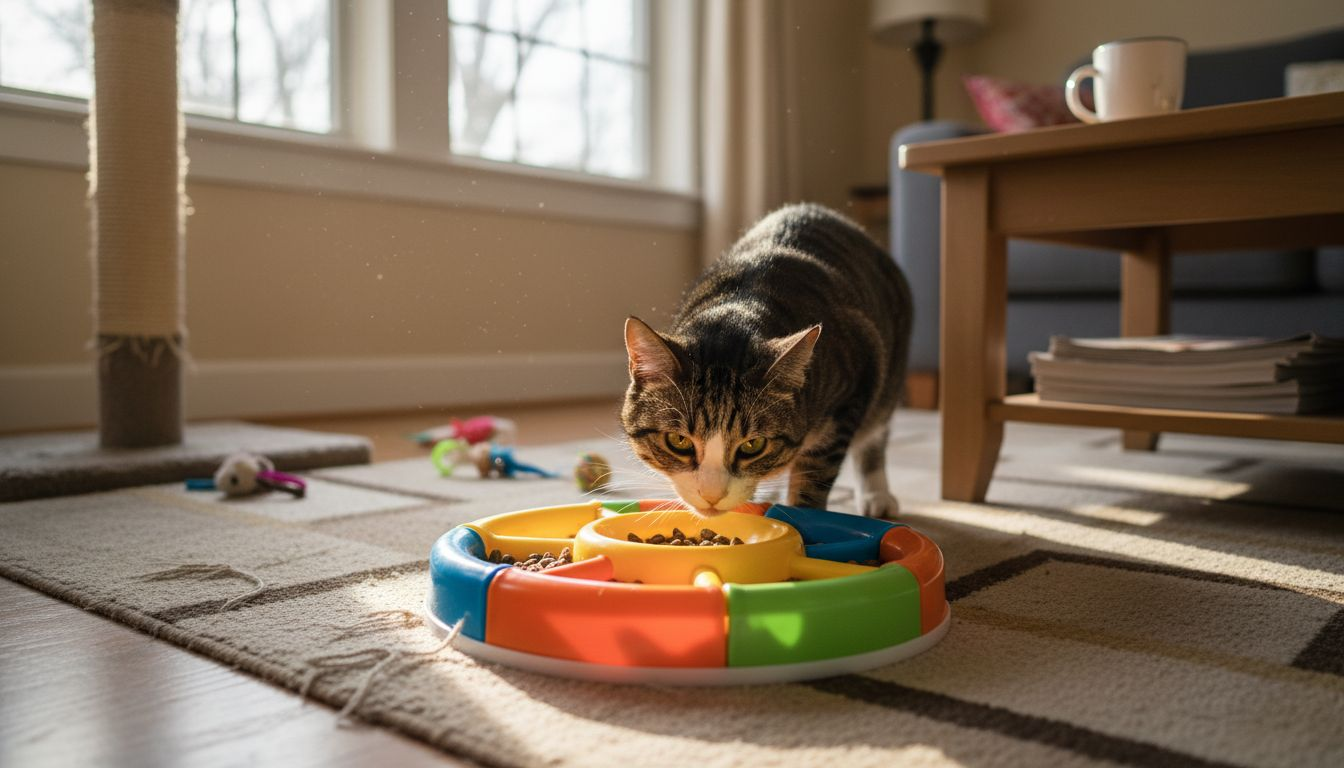
Cognitive engagement represents another crucial aspect of vet-approved interactive feeders. The ideal design should offer adjustable difficulty levels that match your pet’s problem-solving skills, preventing both boredom and overwhelming frustration. Look for feeders that encourage natural foraging behaviors, promote mental stimulation, and can evolve as your pet becomes more adept at solving puzzles. Some advanced designs incorporate multiple challenge mechanisms, such as rotating compartments, lifting lids, or sliding panels, which keep pets mentally active and emotionally satisfied during mealtime.
Pro tip: Regularly inspect your interactive feeder for signs of wear and replace it immediately if you notice any damage or potential safety risks.
This table summarizes essential features of vet-approved interactive feeders:
| Feature | Why It Matters | What To Check |
|---|---|---|
| Safe Materials | Prevents toxicity and injury | Food-safe, BPA-free plastics |
| Durability | Withstands rough use | Robust construction, no weak points |
| Adjustable Difficulty | Matches pets’ skills | Multiple challenge levels offered |
| Easy to Clean | Reduces health risks | Simple to disassemble and wash |
Risks and common mistakes with feeders
Navigating the world of interactive feeders requires understanding potential pitfalls that can compromise your pet’s safety and experience. Interactive feeding options involve nuanced considerations that extend beyond simple food delivery.
One of the most significant risks is selecting inappropriate feeder complexity. Choosing a puzzle feeder that is too challenging can lead to pet frustration, anxiety, and potential food avoidance. Pets may become discouraged if the mental challenge exceeds their cognitive abilities, causing stress and potentially disrupting their feeding routine. Conversely, feeders that are too simple might fail to provide adequate mental stimulation, defeating the primary purpose of interactive feeding.
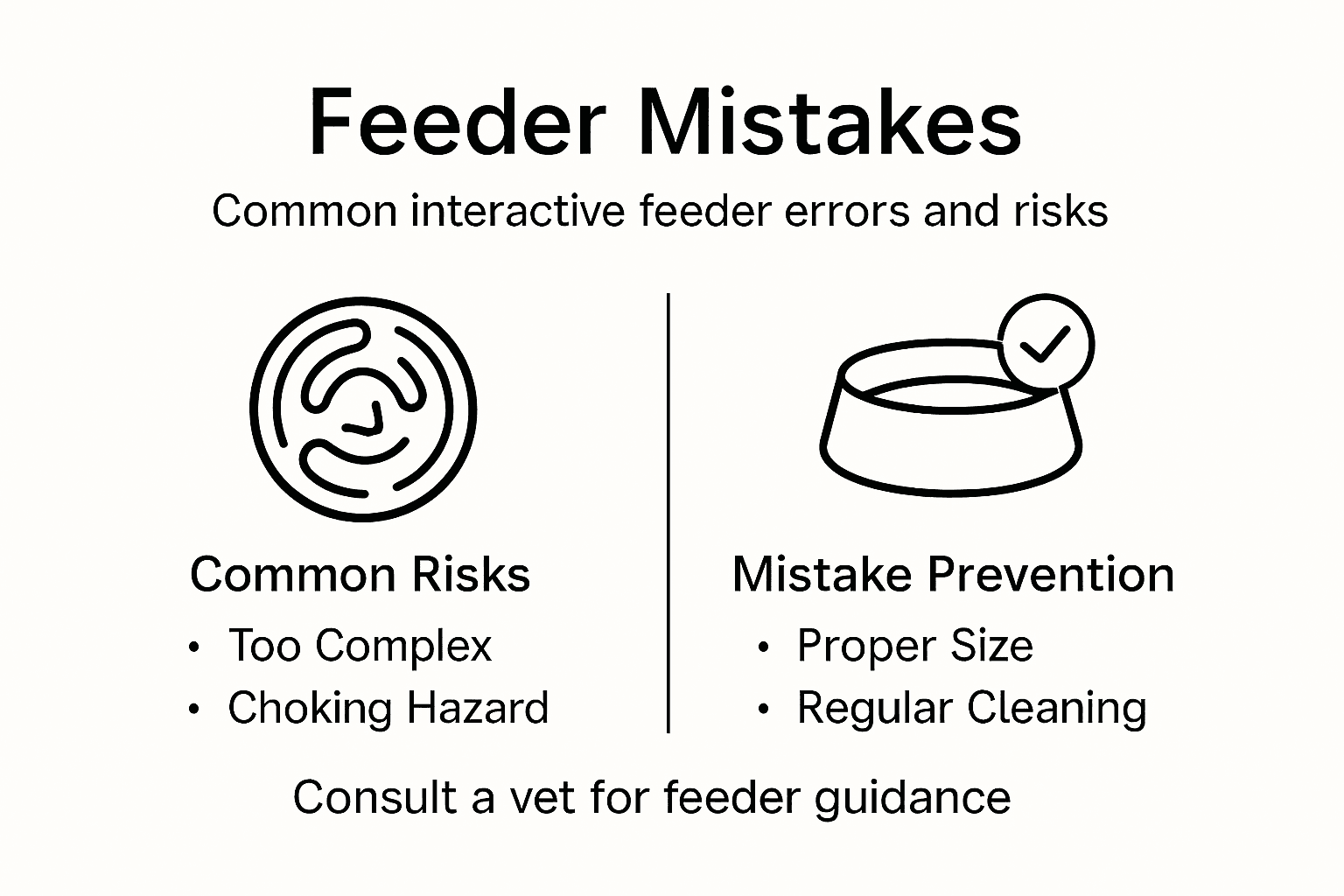
Hygiene and maintenance represent another critical area of concern. Interactive feeders with intricate designs can harbor bacteria if not thoroughly cleaned between uses. Small crevices and hard-to-reach compartments create perfect environments for bacterial growth, potentially leading to digestive issues or more serious health complications. Additionally, pets might accidentally ingest non-food parts or become injured by damaged feeder components if regular inspection and maintenance are neglected.
Pro tip: Always supervise your pet’s first interactions with a new interactive feeder and perform weekly detailed inspections to ensure continued safety and functionality.
Enhance Your Pet’s Wellbeing with Vet-Approved Interactive Feeders
The article highlights how interactive feeders can solve common pet challenges such as boredom, anxiety, and destructive behavior while promoting natural foraging instincts and mental stimulation. If you want to support your pet’s physical and cognitive health through safe, effective feeding solutions, choosing the right products matters. At Pawfect Picks, we understand the importance of vet-approved designs that prioritize durability, safety, and adjustable difficulty to keep your pet engaged and happy.
Explore our carefully selected range of interactive feed solutions that align with expert advice and proven benefits. From slow feeders to advanced puzzle toys, we offer products that help manage eating speed, encourage problem solving, and reduce stress for pets of all activity levels. Don’t wait to transform mealtime into a rewarding experience for your furry friend.

Discover how our expert-picked interactive feeders can improve your pet’s behavior and wellbeing today. Visit Pawfect Picks to find vet-approved options designed to challenge and delight your companion. Start with the right feeder to unlock your pet’s potential and see the difference interactive feeding can make.
Frequently Asked Questions
What are interactive feeders and how do they benefit pets?
Interactive feeders are innovative tools that engage pets in problem-solving during mealtime. They promote natural foraging behaviors, reduce boredom, and provide significant mental stimulation, contributing to improved behavior and overall wellbeing.
How do I choose the right interactive feeder for my pet?
When selecting an interactive feeder, consider your pet’s skill level, safety features, and durability. Look for adjustable difficulty levels to prevent both frustration and boredom, ensuring optimal mental engagement during feeding.
Can interactive feeders help with my pet’s destructive behaviors?
Yes! Interactive feeders can significantly reduce destructive behaviors by providing mental challenges and keeping pets engaged. They mimic natural hunting and foraging behaviors, which keeps pets mentally stimulated and reduces anxiety.
What should I watch out for when using an interactive feeder?
Be mindful of the complexity of the feeder you choose; if it’s too difficult, it may frustrate your pet. Additionally, regularly inspect the feeder for wear and cleanliness to prevent health issues. Ensure it is made from safe materials to avoid any potential hazards.
Recommended
- 7 Key Advantages of Automatic Pet Feeders for Busy Owners – Pawfect Picks
- ⭐ Dog Treat Leaking Tumbler Toy – Interactive Slow Feeder & IQ Trainin – Pawfect Picks
- ⭐ Dog Treat Leaking Tumbler Toy – Interactive Slow Feeder & IQ Trainin – Pawfect Picks
- Top 10 Smart Dog Toys for 2025: What Keeps Tails Wagging and Brains Bu – Pawfect Picks