
Why Use Slow Feeders: Healthier Mealtimes for Dogs
More than half of urban American dogs are overweight or face digestion issues linked to fast eating. For pet owners in cities worldwide, rushing through meals can lead to bloating, vomiting, and risky gastrointestinal problems. With growing attention from veterinarians, slow feeders offer a smart, vet-approved way to address these concerns while transforming how dogs experience mealtime. Discover how these tools work and why they are changing the conversation around canine health in modern city life.
Table of Contents
- What Are Slow Feeders for Dogs?
- Major Types of Dog Slow Feeders
- How Slow Feeders Improve Digestion
- Behavioral and Mental Health Benefits
- Choosing the Right Slow Feeder Bowl
- Common Mistakes and Safety Tips
Key Takeaways
| Point | Details |
|---|---|
| Slow Feeders Promote Healthier Eating | They are designed to slow down dogs’ eating, reducing risks such as choking and digestive discomfort. |
| Types of Slow Feeders Vary in Complexity | Options include maze-style, puzzle feeders, and compartmentalized dishes, catering to different dog personalities and needs. |
| Improved Digestion Through Controlled Eating | Slow feeders enhance digestive health by encouraging smaller bites, reducing air intake, and increasing saliva production. |
| Mental Stimulation Supports Emotional Well-Being | They provide cognitive challenges that can alleviate anxiety and improve behavior in dogs, especially those with competitive eating backgrounds. |
What Are Slow Feeders for Dogs?
Slow feeders are specialized dog food bowls engineered to transform mealtimes from rapid consumption into a more controlled, health-conscious eating experience. These innovative feeding tools feature intricate designs with raised obstacles, mazes, and puzzle-like structures that physically prevent dogs from gulping down food too quickly. The primary goal is to encourage dogs to eat more deliberately, reducing risks associated with fast eating such as choking, bloating, and digestive discomfort.
Designed with canine health in mind, slow feeders come in various styles that challenge dogs to work around physical barriers while eating. Some models resemble intricate labyrinths with strategically placed ridges, while others look like interactive puzzles with multiple compartments that dogs must navigate. These specialized bowls help moderate eating speed by forcing dogs to take smaller bites and chew more thoroughly, which supports better digestion and reduces potential emergency health risks.
The mechanisms behind slow feeders are both simple and ingenious. By creating physical challenges within the bowl’s structure, these feeding tools naturally slow down a dog’s eating pace. Dogs must maneuver around obstacles, extracting small amounts of food at a time, which mimics more natural foraging behaviors. This approach not only prevents rapid food consumption but also provides mental stimulation, turning mealtime into an engaging activity that promotes both physical and cognitive well-being.
Pro tip: Select a slow feeder with difficulty levels matching your dog’s size and problem-solving skills to ensure an optimal and enjoyable eating experience.
Major Types of Dog Slow Feeders
Dog slow feeders come in a diverse array of designs, each targeting different eating behaviors and dog personalities. Feeding behaviors in dogs can be systematically categorized by how animals interact with their food, and slow feeders reflect this complexity through innovative structural approaches. The primary types include maze-style bowls, puzzle feeders, interactive toys, and compartmentalized dishes, all engineered to decelerate food consumption and promote healthier eating habits.
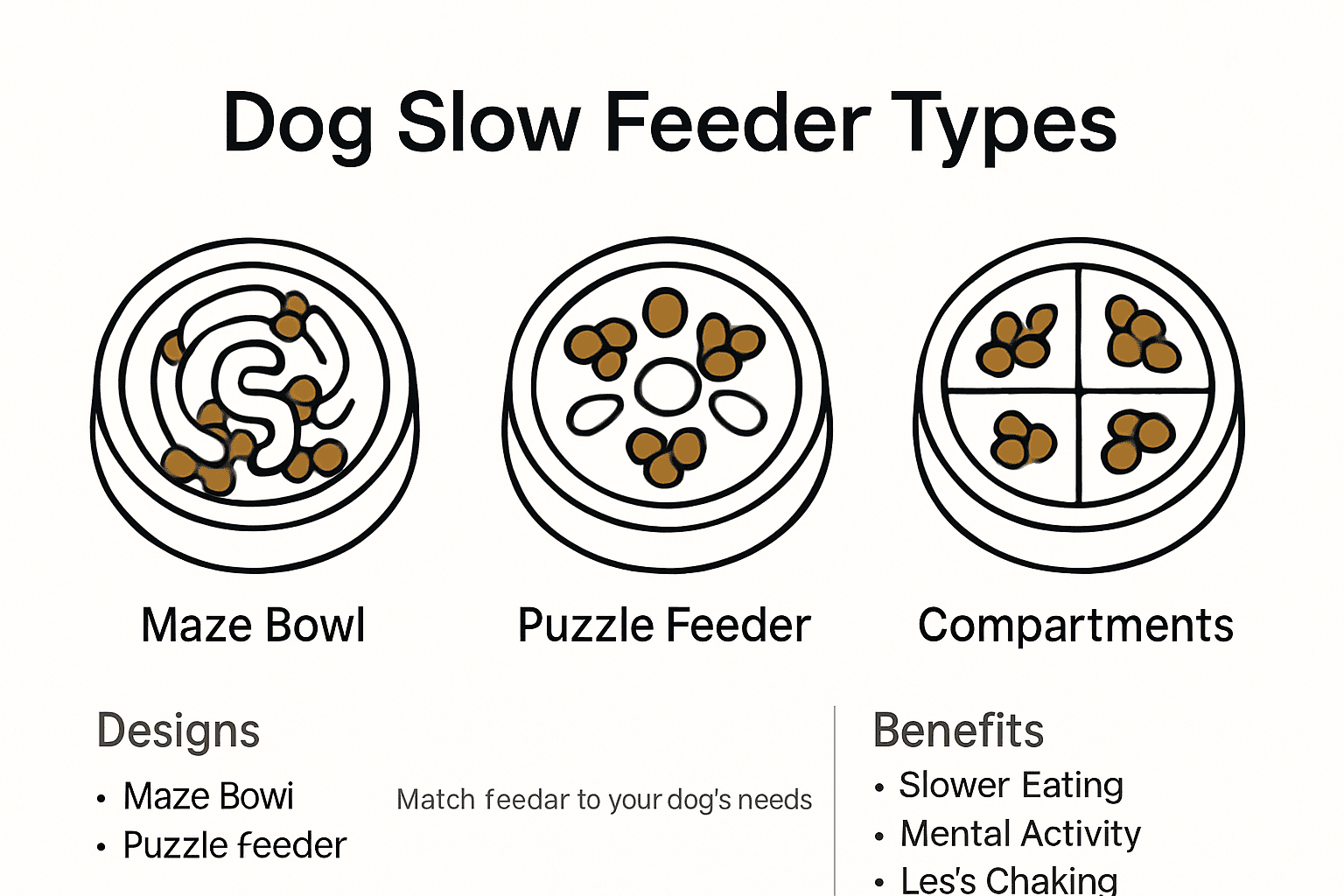
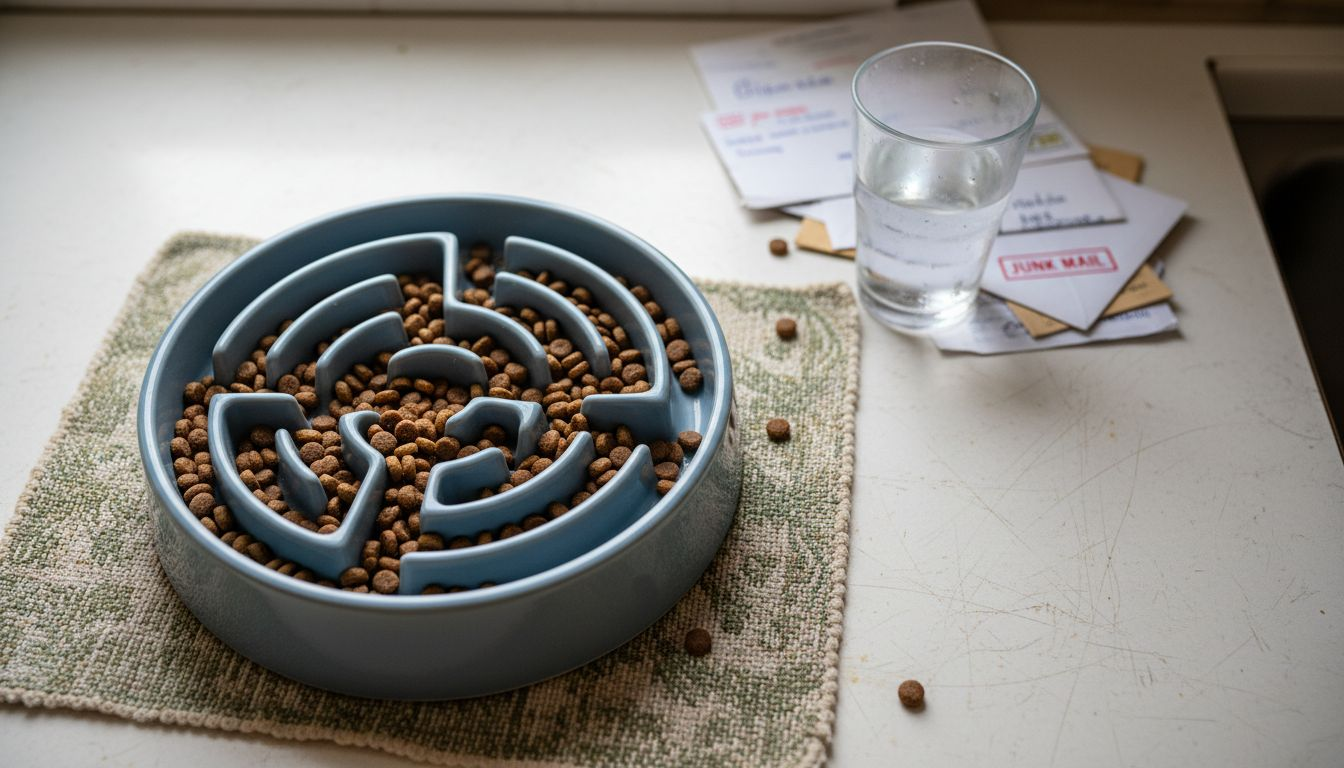
Maze-style bowls represent the most straightforward slow feeder design. These bowls feature intricate internal ridges, raised obstacles, and winding pathways that physically prevent dogs from taking large mouthfuls. The bowl’s architecture forces dogs to navigate around barriers, extracting small amounts of kibble with each attempt. Some models have concentric circular patterns, while others resemble complex geometric labyrinths, creating a challenging eating environment that naturally slows food intake.
Puzzle and interactive slow feeders elevate the eating experience by transforming mealtime into a mental challenge. These advanced designs require dogs to problem-solve, tilting, rolling, or manipulating the feeder to access food. Such feeders not only slow eating speed but also provide crucial mental stimulation, engaging a dog’s cognitive skills and natural foraging instincts. They range from simple treat-dispensing balls to complex multi-level interactive toys that require strategic manipulation to release food.
Compartmentalized slow feeders offer another innovative approach, dividing food into smaller sections that require careful navigation. These designs typically feature multiple compartments or depth variations that make it difficult for dogs to gulp food quickly. By creating physical barriers and requiring more deliberate eating strategies, these feeders help prevent potential health issues like bloating and improve overall digestive processes.
Here is a comparison of major slow feeder types and their unique features:
| Slow Feeder Type | Mechanical Challenge | Mental Stimulation Level | Best For |
|---|---|---|---|
| Maze-style Bowl | Complex ridges, winding paths | Low to moderate | Dogs needing basic slowing |
| Puzzle/Interactive Toy | Manipulation, treat-release | High | Intelligent, high-energy dogs |
| Compartmentalized Dish | Multiple food sections | Moderate | Dogs that gulp food |
Pro tip: Match your slow feeder to your dog’s size, breed, and problem-solving skills to ensure an engaging and effective feeding experience.
How Slow Feeders Improve Digestion
Digestive health in dogs depends significantly on eating patterns, and slow feeders play a critical role in optimizing these processes. Veterinary guidelines highlight how eating speed directly impacts gastrointestinal function, with rapid consumption leading to numerous potential health complications. When dogs eat too quickly, they inadvertently swallow excess air, disrupt natural digestive enzyme production, and increase risks of conditions like bloating, vomiting, and potential gastric distress.
The mechanical design of slow feeders fundamentally transforms how dogs consume food, promoting more deliberate and controlled eating. By creating physical barriers that prevent large mouthfuls, these innovative feeding tools compel dogs to take smaller, more measured bites. This approach triggers several crucial digestive benefits: increased saliva production, more thorough chewing, and reduced air intake. The extended eating time allows digestive enzymes more opportunity to initiate breakdown processes, ultimately supporting more efficient nutrient absorption and reducing digestive stress.
Beyond mechanical intervention, slow feeders contribute to improved digestive health through psychological mechanisms. The problem-solving aspect of navigating complex feeding surfaces engages a dog’s mental faculties, reducing anxiety and stress associated with mealtimes. Stress reduction itself plays a significant role in digestive efficiency, as chronic anxiety can negatively impact gut health and nutrient processing. Moreover, the mental stimulation provided by interactive feeding approaches mimics natural foraging behaviors, aligning more closely with a dog’s evolutionary eating patterns.
Advanced veterinary research, including comprehensive guidelines from the American Animal Hospital Association, consistently demonstrates that controlled eating speeds can significantly reduce risks of serious conditions like aerophagia and gastric dilatation. By moderating food intake, slow feeders help prevent potentially life-threatening digestive emergencies while simultaneously improving overall nutritional absorption and metabolic efficiency.
Pro tip: Introduce slow feeders gradually and monitor your dog’s adaptation to ensure comfortable and stress-free mealtimes.
Behavioral and Mental Health Benefits
Slow feeders represent far more than just a physical feeding solution—they are powerful tools for enhancing a dog’s mental and emotional well-being. Veterinary research demonstrates the profound psychological impact of interactive feeding experiences, revealing that mealtime can be transformed from a mere nutritional necessity into a complex cognitive engagement that reduces anxiety and promotes mental stimulation.
The problem-solving nature of navigating slow feeders triggers important psychological mechanisms in dogs. When confronted with a puzzle-like feeding environment, dogs must strategically approach their food, activating mental pathways that mimic natural foraging behaviors. This cognitive challenge helps prevent boredom, reduces potential destructive behaviors stemming from understimulation, and provides a constructive outlet for a dog’s natural problem-solving instincts. The mental engagement during mealtimes can be particularly beneficial for high-energy or intelligent breeds that require consistent mental challenges to maintain psychological balance.
Emotional regulation is another critical aspect of slow feeder benefits. Dogs that historically experience food-related anxiety—such as rescue dogs or those with competitive eating backgrounds—can find significant psychological relief through controlled, interactive feeding experiences. The deliberate pace and mental engagement help lower stress hormones, create a sense of predictability during mealtimes, and gradually rebuild positive associations with food consumption. This approach is especially powerful for dogs with past trauma or those prone to anxiety-driven eating behaviors.
Beyond individual psychological benefits, slow feeders can positively impact broader social dynamics in multi-pet households. By reducing competitive eating behaviors and providing individual mental challenges, these feeding tools can decrease tension and potential aggression around food areas. The transformation of mealtimes from a potential stress point to an enriching, individually focused experience supports overall household harmony and each dog’s emotional well-being.
Pro tip: Rotate different slow feeder designs to maintain your dog’s interest and continue providing novel mental challenges during mealtimes.
Choosing the Right Slow Feeder Bowl
Selecting the ideal slow feeder bowl requires careful consideration of multiple factors tailored to your individual dog’s unique characteristics. Veterinary experts recommend evaluating your dog’s specific eating habits and physical needs when choosing a slow feeder, understanding that no single design works perfectly for every canine companion. The process involves assessing your dog’s size, breed, eating speed, and problem-solving capabilities to find a bowl that challenges without overwhelming.
Material selection plays a crucial role in slow feeder effectiveness and safety. Stainless steel, ceramic, and food-grade plastics each offer distinct advantages and potential drawbacks. Stainless steel bowls provide durability and easy cleaning, ceramic options offer weight and stability, while plastic feeders tend to be more affordable and lightweight. Consider your dog’s chewing tendencies, potential allergies, and the bowl’s long-term maintenance when making your selection. Dogs with sensitive skin or potential plastic allergies might benefit from non-reactive materials like ceramic or stainless steel.
Design complexity should match your dog’s cognitive abilities and frustration tolerance. Slow feeders range from simple ridged bowls with minimal obstacles to intricate maze-like structures requiring significant problem-solving skills. High-energy and intelligent breeds often thrive with more complex designs that provide substantial mental stimulation, while older dogs or those with limited patience might prefer gentler challenges. Pay attention to your dog’s initial interactions with the slow feeder, watching for signs of engagement versus frustration, and be prepared to adjust the difficulty level accordingly.
Practical considerations extend beyond the feeding experience itself. Ensure the slow feeder is appropriately sized for your dog, providing enough space to comfortably access food without tipping or creating undue stress. Check for stable bases that prevent sliding, dishwasher-safe materials for convenient cleaning, and designs that can be easily sanitized. Some slow feeders incorporate additional features like non-slip bottoms or modular components that can adapt as your dog’s skills improve.
Below is a summary of key factors to consider when picking the best slow feeder for your dog:
| Factor | Why It Matters | Ideal Choice Suggestion |
|---|---|---|
| Material | Impacts durability, safety | Stainless steel for chewers, ceramic for allergies |
| Design Complexity | Matches dog’s cognition | Simple for seniors, complex for active breeds |
| Bowl Size | Ensures comfort and access | Wide, stable base for large dogs |
| Cleaning Ease | Maintains hygiene | Dishwasher-safe, few hard-to-reach crevices |
Pro tip: Start with a moderately challenging slow feeder and observe your dog’s reaction, being prepared to switch to easier or more complex designs based on their individual response.
Common Mistakes and Safety Tips
Implementing slow feeders requires thoughtful approach and careful monitoring to ensure your dog’s safety and comfort. Veterinary nutritionists emphasize the importance of supervised introduction and gradual adaptation when integrating these specialized feeding tools. The most critical mistakes often stem from rushing the process or selecting inappropriate designs that may cause frustration or potential injury.
Material integrity and design complexity represent significant safety considerations. Owners must critically evaluate slow feeder construction, avoiding bowls with sharp edges, fragile components, or materials prone to breaking during enthusiastic use. Cheaper plastic feeders might deteriorate quickly, creating potential choking hazards or allowing small fragments to be accidentally ingested. Stainless steel and high-quality ceramic options provide more durable alternatives that maintain structural integrity during repeated use and enthusiastic interactions.
Psychological adaptation is equally important when introducing slow feeders. Dogs with previous eating anxieties or competitive feeding backgrounds might experience stress when confronted with a new feeding mechanism. Some dogs may become frustrated if the feeder’s complexity exceeds their problem-solving skills, potentially leading to reduced food intake or negative associations with mealtimes. Careful observation during initial interactions helps owners understand whether the selected slow feeder matches their dog’s cognitive abilities and temperament.
Hygiene represents another critical safety dimension often overlooked by pet owners. Slow feeders with intricate designs can harbor bacteria in hard-to-clean crevices, potentially compromising your dog’s health. Selecting dishwasher-safe models, choosing materials that resist bacterial growth, and establishing a consistent cleaning routine are essential preventative strategies. Regular inspection for wear and tear, replacing feeders that show signs of significant deterioration, ensures ongoing safety and effectiveness.
Pro tip: Always introduce slow feeders gradually, using positive reinforcement and monitoring your dog’s comfort level during the first few feeding sessions.
Enhance Your Dog’s Mealtime with Expert-Backed Slow Feeders
If your dog struggles with gulping food too quickly or experiences digestive discomfort, slow feeders can be the perfect solution. These specially designed bowls offer controlled eating by encouraging smaller bites and stimulating natural foraging behavior as explained in the article. This protects your dog from choking, bloating, and anxiety related to feeding. At Pawfect Picks, we understand how challenging mealtimes can be and provide vet-approved, carefully selected slow feeders designed to support healthier digestion and mental engagement for your furry friend.
Discover a variety of vet-trusted slow feeder options that match your dog’s size, eating habits, and cognitive needs. Take the first step toward transforming mealtimes into calm and enriching moments by visiting Pawfect Picks. Explore our range today and give your dog the gift of healthier digestion and happier feeding experiences backed by over 25 years of veterinary expertise.
Frequently Asked Questions
What are slow feeders and how do they work?
Slow feeders are specialized dog bowls designed to slow down dogs’ eating speeds by incorporating obstacles, mazes, or puzzle-like structures that force dogs to take smaller bites and chew more thoroughly.
How do slow feeders improve a dog’s digestion?
Slow feeders promote slower eating, which helps reduce the risk of bloating and digestive discomfort. They encourage better saliva production and thorough chewing, aiding in more efficient nutrient absorption.
What are the different types of slow feeders available for dogs?
The major types of slow feeders include maze-style bowls, puzzle and interactive toys, and compartmentalized dishes. Each type offers different challenges that cater to dogs’ eating behaviors and cognitive abilities.
How do I choose the right slow feeder for my dog?
Consider factors such as your dog’s size, breed, and problem-solving skills. Additionally, evaluate the material, design complexity, and cleaning ease to ensure an appropriate match that encourages healthy eating habits.
Recommended
- 7 Key Advantages of Automatic Pet Feeders for Busy Owners – Pawfect Picks
- ⭐ Dog Treat Leaking Tumbler Toy – Interactive Slow Feeder & IQ Trainin – Pawfect Picks
- ⭐ Dog Treat Leaking Tumbler Toy – Interactive Slow Feeder & IQ Trainin – Pawfect Picks
- Interactive Dog Toy-Treat Ball with Suction Cup – Silicone Tug & Chew – Pawfect Picks