
Certified Pet Products: Why Safety Matters Most
Shopping for pet products can feel overwhelming when every label promises safety and quality but trust seems harder to find. For many American pet owners, knowing what certified pet products actually mean is the first step in protecting furry family members from hidden risks. Understanding the rigorous standards behind certified pet product safety helps you make informed choices and avoid pitfalls that could compromise your pet’s health or your peace of mind.
Table of Contents
- What Certified Pet Products Actually Mean
- Major Pet Product Certification Types Explained
- How Certification Standards Safeguard Pets
- Health, Legal, and Financial Risks of Uncertified Items
- How to Spot and Verify Certified Pet Products
Key Takeaways
| Point | Details |
|---|---|
| Certified Pet Products Ensure Safety | Certification signifies adherence to rigorous testing standards for safety and quality in pet products. |
| Know Certification Types | Familiarize yourself with major certifications like FDA Compliance and AAFCO Approval for informed purchasing. |
| Risks of Uncertified Products | Uncertified items can expose pets to health hazards and manufacturers to legal and financial repercussions. |
| Verify Certification | Always check for official certification marks and request documentation to ensure product authenticity and safety. |
What Certified Pet Products Actually Mean
Certified pet products represent more than just a label - they signify a comprehensive commitment to safety, quality, and transparency in the pet care industry. These products undergo rigorous testing and validation processes to ensure they meet specific standards that protect both pets and their owners. Pet safety regulations now require detailed documentation and ingredient verification to guarantee consumer protection.
The certification process for pet products typically involves multiple critical evaluations:
- Ingredient Quality: Comprehensive screening of all components
- Manufacturing Standards: Adherence to strict production guidelines
- Safety Testing: Extensive laboratory analysis for potential health risks
- Labeling Accuracy: Precise documentation of product contents
Unlike generic products, certified items provide pet owners with documented assurance about what they’re bringing into their homes. These products must demonstrate compliance with national and international regulatory frameworks, which often include detailed requirements for organic composition, ingredient sourcing, and potential environmental impact.

While certification standards can vary between regions, most reputable certifications require manufacturers to prove their products meet or exceed established health and safety benchmarks. These standards protect pets from potentially harmful substances and provide consumers with transparent, trustworthy information about the products they purchase.
Pro tip: Always check for official certification logos and ask your veterinarian about recommended product standards before making pet product purchases.
Major Pet Product Certification Types Explained
Pet product certifications represent a complex landscape of safety and quality standards that protect both animals and consumers. Pet product certification systems play a critical role in ensuring that pet-related items meet rigorous health and safety requirements across multiple regulatory domains.
The most significant certification types include:
- FDA Compliance: Guarantees food and product safety standards
- AAFCO Approval: Ensures nutritional adequacy for pet foods
- CE Certification: Validates electronic and technological pet products in the European market
- Safe Quality Food (SQF): Provides comprehensive manufacturing quality assurance
- HACCP: Manages potential hazards in food production processes
These certifications address different aspects of pet product safety. FDA compliance, for instance, focuses on ingredient safety and labeling accuracy, while AAFCO approval specifically evaluates the nutritional completeness of pet foods. International standards like ISO 22000 food safety management provide additional layers of quality control for manufacturers worldwide.
Technology-specific certifications are equally important. FCC certification regulates electronic pet devices sold in the United States, ensuring that technological products meet electromagnetic compatibility and safety standards. These specialized certifications help pet owners make informed decisions about the products they choose for their animal companions.
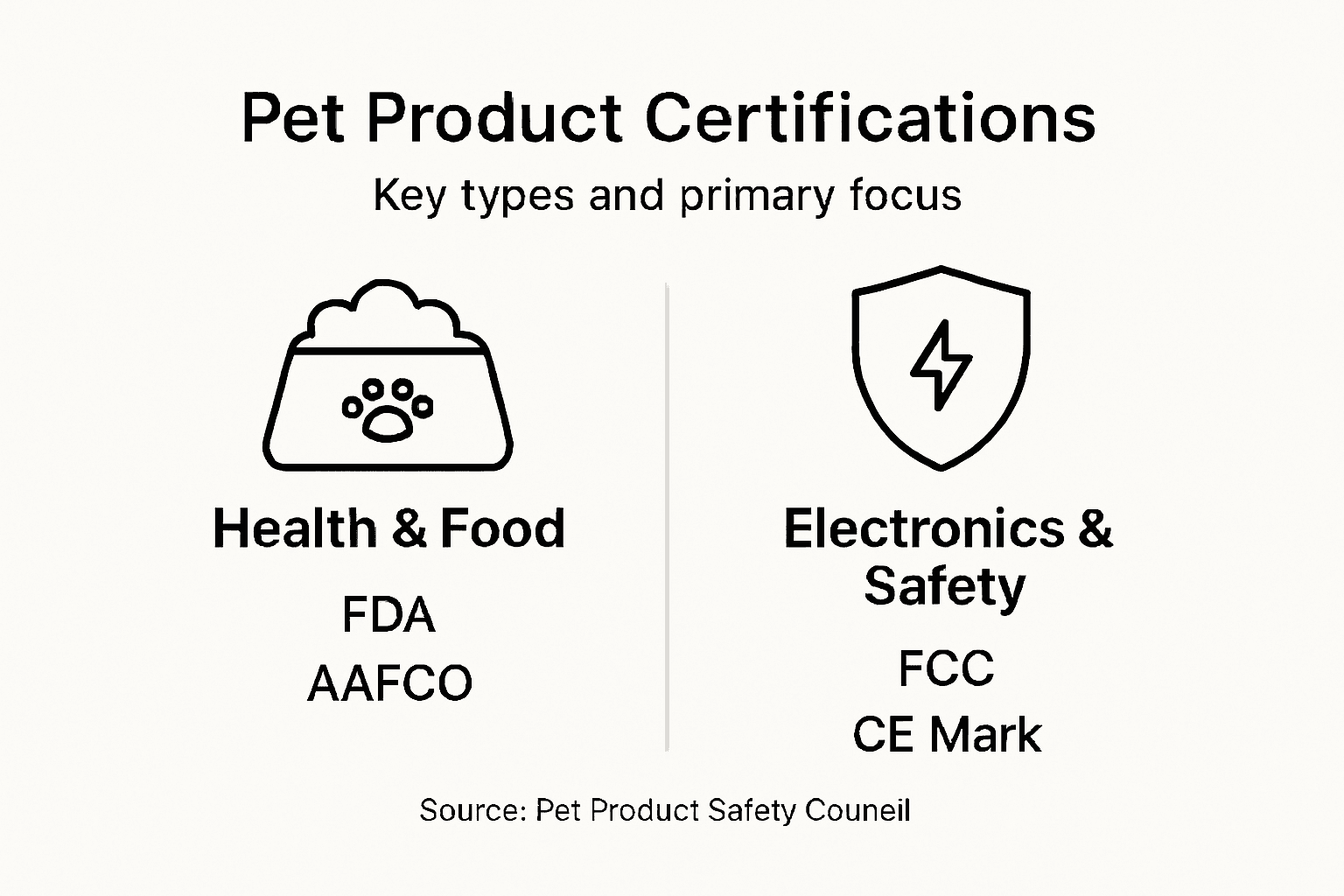
Here’s a comparison of major pet product certification types and their primary areas of focus:
| Certification Type | Main Focus | Applicable Region |
|---|---|---|
| FDA Compliance | Ingredient safety and labeling | United States |
| AAFCO Approval | Nutritional adequacy | United States |
| CE Certification | Electronics safety and compliance | European Union |
| Safe Quality Food (SQF) | Manufacturing process quality | International |
| HACCP | Hazard-based food safety | International |
| FCC Certification | Electronic products’ safety standards | United States |
Pro tip: Always request certification documentation from pet product manufacturers and consult with veterinary professionals about recommended safety standards.
How Certification Standards Safeguard Pets
Pet safety begins with rigorous certification standards that protect animals from potential harm. Certification standards developed by industry experts create comprehensive guidelines that minimize risks across multiple dimensions of pet product design and manufacturing.
Key areas of protection include:
- Choking Hazard Prevention: Detailed size and material specifications
- Toxic Material Screening: Comprehensive chemical safety testing
- Mechanical Integrity: Stress testing for product durability
- Nutritional Compliance: Strict ingredient and nutritional standard verification
- Manufacturing Quality Control: Ongoing production process monitoring
These standards go far beyond simple product testing. Professional organizations like Pet Care Certification Councils ensure that not just products, but also pet care professionals meet stringent safety requirements. By establishing precise knowledge and skill benchmarks, these certifications create multiple layers of protection for animal welfare.
Advanced certification processes involve collaborative efforts between veterinarians, consumer advocates, manufacturers, and safety experts. This multi-stakeholder approach ensures that certification standards continuously evolve to address emerging risks and technological innovations in pet product development.
Pro tip: When purchasing pet products, always verify the specific certifications and ask manufacturers about their safety testing protocols.
Health, Legal, and Financial Risks of Uncertified Items
Uncertified pet products pose significant risks that extend far beyond simple product quality concerns. Pet product safety failures can create dangerous situations for pets, potentially leading to serious health complications and substantial financial consequences for both pet owners and manufacturers.
The primary risks of uncertified items include:
- Health Hazards: Potential toxic chemical exposure
- Mechanical Risks: Increased likelihood of product failures
- Chemical Contamination: Unregulated ingredient potential
- Legal Vulnerabilities: Potential regulatory enforcement actions
- Financial Consequences: Costly product recalls and reputation damage
Chemical contaminant risks represent one of the most dangerous aspects of uncertified products. Unverified pet foods might contain harmful substances like pesticides and toxins that can cause serious long-term health problems, including potential organ damage and increased cancer risks for pets.
Manufacturers who circumvent certification standards expose themselves to substantial legal and financial risks. Regulatory bodies can impose significant fines, mandate expensive product recalls, and potentially restrict market access. Moreover, the reputational damage from selling unsafe products can devastate a brand’s credibility and consumer trust.
Below is a summary of key risks associated with uncertified pet products:
| Risk Category | Example Consequences | Impacted Stakeholders |
|---|---|---|
| Health Risks | Toxic exposure, organ damage | Pets, owners |
| Legal Risks | Fines, product recalls | Manufacturers |
| Financial Risks | Lost revenue, reputation harm | Brands, businesses |
| Compliance Risks | Market access restrictions | Manufacturers |
Pro tip: Always request and verify product certification documentation before purchasing any pet-related items.
How to Spot and Verify Certified Pet Products
Product certification verification is a critical step in ensuring pet safety and product reliability. Pet product certification verification requires careful examination of multiple key indicators that demonstrate a product’s compliance with established safety standards.
Key methods for identifying certified products include:
- Certification Marks: Look for official seals from recognized bodies
- QR Code Verification: Scan unique product tracking codes
- Manufacturer Documentation: Request detailed testing reports
- Independent Testing Logos: Check for third-party certification badges
- Regulatory Compliance Indicators: Validate against known safety standards
Third-party testing reports provide the most transparent method of verification. These comprehensive documents reveal detailed testing processes against established regulations like CA Prop 65, RoHS, REACH, and FDA guidelines, offering consumers concrete evidence of a product’s safety and quality.
Consumers should be vigilant about potential red flags such as unverifiable claims, missing certification information, or manufacturers unwilling to provide detailed documentation. Legitimate certified products will have clear, accessible information about their testing processes and compliance with recognized safety standards.
Pro tip: Always request a digital or physical copy of certification documentation and verify its authenticity directly with the issuing organization.
Choose Certified Pet Products That Protect What Matters Most
The article highlights the critical challenge of navigating the complex world of pet product certifications to keep your pet safe from health risks, toxic materials, and legal pitfalls. When buying pet products, you want clear safety testing, manufacturer transparency, and proven certifications like FDA Compliance and AAFCO Approval to ensure your pet’s wellbeing.
At Pawfect Picks, we understand the frustration of uncertified products and the potential harm they can cause. Backed by over 25 years of veterinary expertise, we carefully select only vet-approved items that meet rigorous quality and safety standards. Discover our trusted collection designed to support your pet’s health and happiness every day.
Looking for peace of mind with certified pet supplies? Visit Pawfect Picks to explore our handpicked selections built on transparency and safety. Read more about pet product certifications and why they matter at Certified Pet Products: Why Safety Matters Most.
Unlock your pet’s healthiest future now.
Shop confidently with Pawfect Picks and protect your beloved companion today. Explore our carefully vetted products at Pawfect Picks and never compromise on safety again.
Frequently Asked Questions
What does certified pet products mean?
Certified pet products signify a commitment to safety, quality, and transparency, having undergone thorough testing to meet specific industry standards that ensure protection for both pets and their owners.
How can I verify if a pet product is certified?
You can verify certified pet products by checking for certification marks, scanning QR codes for tracking, requesting manufacturer documentation, looking for independent testing logos, and validating against known safety standards.
What are the major types of pet product certifications?
Key pet product certifications include FDA compliance for ingredient safety, AAFCO approval for nutritional adequacy in pet foods, CE certification for electronic products, and HACCP for hazard analysis in food production.
Why are uncertified pet products considered risky?
Uncertified pet products can pose health hazards due to potential toxic chemical exposure, mechanical risks from product failures, and legal vulnerabilities, which can lead to significant financial consequences for both pets and manufacturers.
Recommended
- Pet Safety Checklist for Happy, Healthy Pets at Home – Pawfect Picks
- Vet Approved Pet Care: Why It Matters for Your Pet – Pawfect Picks
- How to Select Pet Toys for Safe and Enriching Playtime – Pawfect Picks
- What Is a Healthy Pet Treat? Vet Insights Matter – Pawfect Picks
- The Essential Guide to the Importance of Pet Safety – iPupPee
- Traceability vs. Transparency: Key Differences in Pet Food