
How to Select Pet Toys for Safe and Enriching Playtime
Most American pet owners struggle to find toys that balance fun with safety. With over 60 percent of homes sharing life with a dog or cat, the quest for vet approved playthings is more than just a shopping choice. Selecting the right toys not only enriches your pet’s playtime but also protects their health, behavior, and happiness. Discover expert tips that help you match play preferences, choose safe materials, and ensure every toy meets strict standards.
Table of Contents
- Step 1: Assess Your Pet’s Play Preferences
- Step 2: Identify Safe and Durable Toy Materials
- Step 3: Choose Toys Based on Age and Size
- Step 4: Verify Vet Approval and Safety Standards
- Step 5: Test Toy Engagement and Monitor Pet’s Use
Quick Summary
| Key Insight | Explanation |
|---|---|
| 1. Understand Play Preferences | Observe your pet’s play style to select toys that engage their instinct and encourage play. |
| 2. Prioritize Safe Materials | Choose non-toxic, durable materials to prevent health risks and ensure long-lasting toys. |
| 3. Match Toys to Age and Size | Select toys that are appropriate for your pet’s age and size to enhance safety and enjoyment. |
| 4. Verify Safety Standards | Research toy manufacturers for credible safety certifications to ensure toys are safe. |
| 5. Monitor Engagement and Use | Track how your pet interacts with toys to refine toy selection and keep playtime enriching. |
Step 1: Assess Your Pet’s Play Preferences
Understanding your pet’s unique play style requires careful observation and thoughtful analysis. Just like humans, animals have individual preferences that influence their interaction with toys and playtime activities. Pet behavior experts recommend paying close attention to your pet’s temperament, energy level, and natural instincts to select engaging toys that truly spark their interest.
Start by watching your pet’s natural play patterns. Does your dog prefer chasing, tugging, or retrieving? Do cats lean towards batting at dangling objects or pouncing on moving targets? Notice which movements excite them most and which toys currently capture their attention. Some pets enjoy puzzle toys that challenge their problem solving skills, while others prefer simple plush items they can carry around. Track their reactions the most interactive toys like the Dog Treat Leaking Tumbler Toy to understand what mentally and physically stimulates them.
Pro Tip: Keep a short play preference journal for one week to systematically track your pet’s most enthusiastic toy interactions and engagement levels.
Here’s how toy types align with different pet play styles:
| Play Style | Toy Example | Mental Challenge Level |
|---|---|---|
| Fetch and Retrieve | Rubber ball, Frisbee | Moderate |
| Puzzle Solving | Treat maze, Puzzle cube | High |
| Chewing | Rope toy, Nylabone | Low |
| Pouncing/Batting | Feather wand, Ball track | Moderate |
| Carrying/Cuddling | Plush animal | Low |
Step 2: Identify Safe and Durable Toy Materials
Toy safety standards go far beyond simple entertainment when it comes to selecting appropriate materials for pet toys. Understanding the critical importance of material composition can prevent potential health risks and ensure your pet’s wellbeing during playtime. The right materials protect against choking hazards, chemical exposure, and structural breakdown that could harm your furry friend.

Examine toy materials through a comprehensive safety lens. Look for toys constructed from non toxic, phthalate free, and BPA free materials that can withstand aggressive chewing and rough handling. Safety guidelines recommend prioritizing natural materials like thick cotton, sturdy rubber, and dense nylon that resist tearing. Avoid plastic toys with questionable chemical compositions or those that easily splinter. For dogs, thick rubber chew toys or rope toys provide durability. For cats, consider dense fabric toys or solid rubber balls that resist shredding. Always inspect toys regularly for signs of wear and replace them before they become potential choking risks.
Pro Tip: Perform a weekly toy inspection by pulling and stretching toys to check for weak points or emerging tears that could compromise safety.
Step 3: Choose Toys Based on Age and Size
Developmental guidelines emphasize the critical importance of matching toys precisely to your pet’s current life stage and physical characteristics. Selecting the wrong size or complexity of toy can transform playtime from an enriching experience into a potential safety hazard. Young animals require different interactive challenges compared to mature pets, making thoughtful toy selection essential for their mental and physical development.
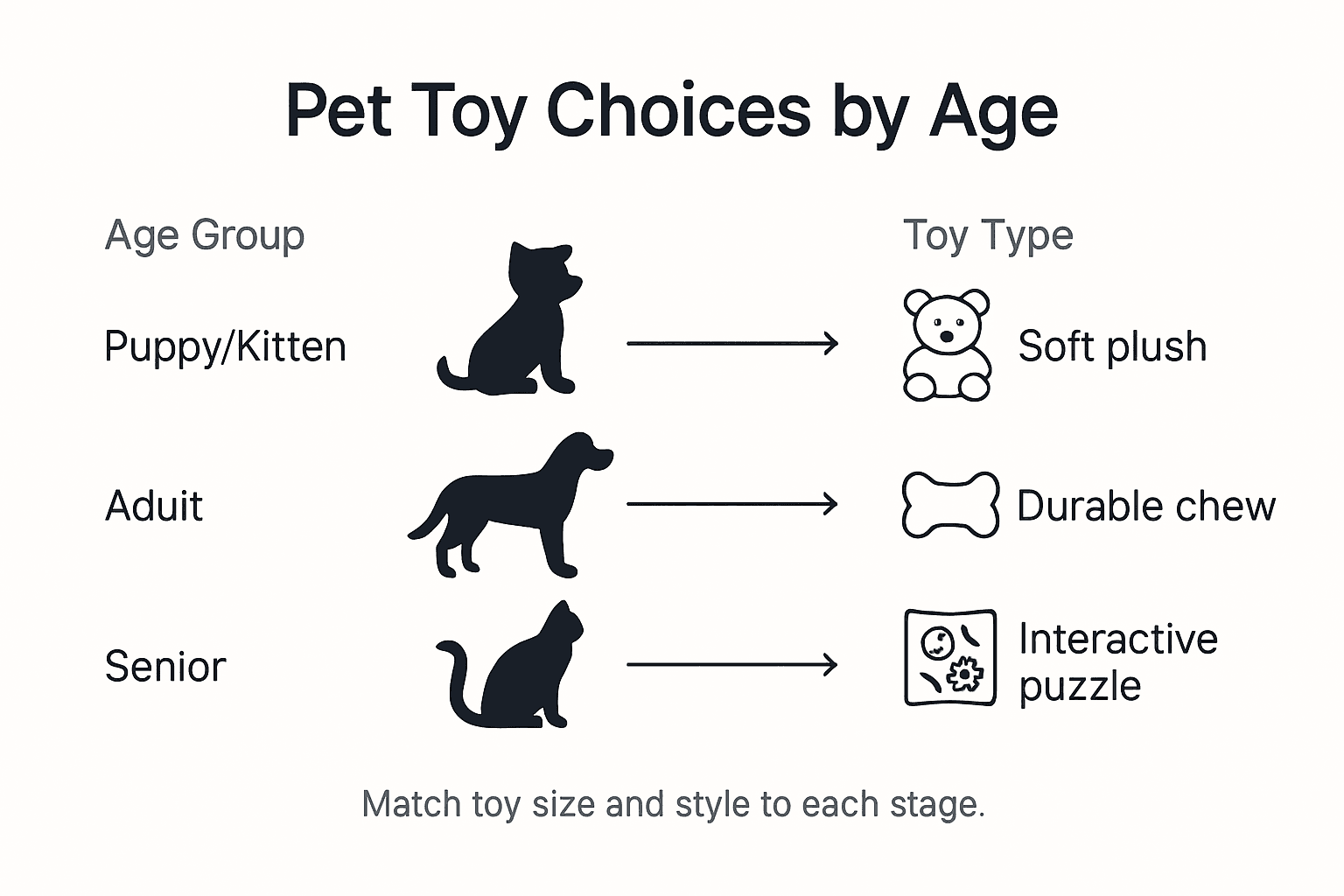
Consider your pet’s specific physical dimensions and capabilities when selecting toys. Puppies and kittens need smaller, softer toys that accommodate their developing teeth and gentle play style. Adult dogs with powerful jaws require more robust toys that can withstand aggressive chewing. Similarly, senior pets might need softer materials that are kind to aging teeth and joints. Measure your pet’s mouth width and consider their typical play intensity. For small dogs and cats, avoid toys larger than their head to prevent choking risks. Large breed dogs need oversized toys that cannot be accidentally swallowed. Check toy packaging for weight and size recommendations, and always supervise initial play sessions to understand how your pet interacts with new toys.
Pro Tip: Create a toy size chart specific to your pet that tracks their current weight and recommended toy dimensions to simplify future purchases.
Use this summary to match pet age and size with suitable toy types:
| Pet Age/Size | Recommended Toy Style | Main Benefit |
|---|---|---|
| Puppy/Kitten | Soft plush, Small balls | Gentle on teeth, easy to grab |
| Adult, Small Pet | Medium chew, Small rope | Proper size, prevents choking |
| Adult, Large Pet | Durable tug, Large ball | Extra strength, safe size |
| Senior Pet | Soft rubber, Fleece toy | Kind to aging teeth/joints |
Step 4: Verify Vet Approval and Safety Standards
FDA regulations for pet products provide critical guidelines for ensuring the safety and quality of pet toys. Understanding these standards helps protect your furry friend from potential health risks associated with substandard or poorly manufactured products. Not all toys are created equal, and professional veterinary oversight can make a significant difference in selecting safe playtime companions.
Research toy manufacturers thoroughly and look for credible safety certifications. Independent testing organizations like the Center for Pet Safety conduct rigorous evaluations that go beyond standard manufacturing requirements. Check for veterinary endorsements, third party testing seals, and comprehensive safety documentation. Look for toys that specify non toxic materials, have been tested for durability, and meet established veterinary safety guidelines. Consult with your personal veterinarian about specific toy recommendations for your pet’s breed, age, and health condition. Pay special attention to toys that have undergone independent safety testing and carry clear documentation of their manufacturing standards and material composition.
Pro Tip: Create a digital folder to save safety certifications and testing documentation for your pet’s toys to track their verified safety standards.
Step 5: Test Toy Engagement and Monitor Pet’s Use
Behavioral tracking techniques reveal critical insights into how pets interact with their toys, transforming playtime from a simple activity into a nuanced understanding of your animal’s preferences and needs. Observing your pet’s response to different toys helps you refine your selection and ensure meaningful, enriching play experiences that stimulate both physical activity and mental engagement.
Carefully watch your pet’s initial and sustained interactions with new toys. Notice their body language, enthusiasm, and specific play patterns. Some pets might quickly lose interest in toys that do not challenge them, while others become overly fixated. Safety monitoring recommendations suggest regularly inspecting toys for signs of wear, potential breaking points, or areas that might cause injury. Pay attention to how your pet chews, tosses, or manipulates the toy. Are they gently exploring or aggressively destroying? Track the duration of play, frequency of interaction, and any signs of frustration or discomfort. Remove toys that show significant damage or no longer spark your pet’s curiosity.
Pro Tip: Create a simple toy interaction log to track your pet’s engagement levels, noting duration of play, enthusiasm, and any unique behaviors with each new toy.
Choose Vet-Approved Pet Toys for Safe and Engaging Play
Selecting the perfect pet toys involves understanding your pet’s unique play style, choosing safe and durable materials, and matching toys to age and size as explained in the article. Many pet owners struggle with finding toys that are both enriching and safe without causing choking hazards or losing durability quickly. Pawfect Picks solves these challenges by offering a curated selection of vet-approved toys backed by over 25 years of veterinary expertise. Our products are carefully chosen to support healthy, happy play while meeting rigorous safety standards and vet endorsements.
Discover interactive toys that stimulate your pet’s natural instincts while prioritizing their wellbeing. From gentle soft plush toys for puppies and kittens to durable chew toys for adult dogs, we have options designed to fit your pet’s life stage and engagement needs.
Bring certainty and confidence to playtime with trusted products you and your pet deserve.
Explore our vet-approved pet products today and experience worry-free play that builds lasting joy and health for your furry companion.
Find the best toys tailored for your pet’s size and play preferences at Pawfect Picks. Take action now to give your pet the safe, enriching playtime they need to thrive.
Frequently Asked Questions
How can I assess my pet’s play preferences?
Understanding your pet’s play preferences involves careful observation. Watch how they interact with different toys, note their enthusiasm levels, and keep a journal of their reactions for about one week to identify their favorite play styles.
What materials should I prioritize when selecting pet toys?
When choosing pet toys, prioritize non-toxic, phthalate-free, and BPA-free materials. Focus on durable options like thick cotton, sturdy rubber, and dense nylon to ensure safety and longevity during playtime.
How do I choose toys that are appropriate for my pet’s age and size?
Select toys based on your pet’s age and size to avoid safety hazards. For example, small dogs require toys that are not larger than their heads, while larger breeds need oversized, durable toys to fit their strength.
Why is it important to verify vet approval before buying pet toys?
Verifying vet approval for pet toys ensures they meet safety standards and are suitable for your pet’s specific needs. Research manufacturers for credible safety certifications and consult your veterinarian for tailored toy recommendations.
How can I test my pet’s engagement with new toys?
To test your pet’s engagement, observe their interactions with new toys carefully. Note their body language, duration of play, and enthusiasm, and make adjustments if they show disinterest or discomfort within the first few play sessions.
What should I do if I notice wear and tear on my pet’s toys?
If you notice wear and tear on your pet’s toys, remove them immediately to prevent choking or injury. Regularly inspect toys for damage at least once a week and replace them if they no longer spark your pet’s interest.