
Why Pet-Proof Your Home Matters for Safety
Finding stylish ways to keep pets safe in a city apartment can feel complicated, especially when curious companions manage to squeeze into unexpected places and discover hidden dangers. For urban pet owners across the United States, creating a secure home means more than just avoiding chewed cords or toppled decor. Bold steps like regular home safety assessments, smart storage solutions, and thinking from your pet’s perspective are key to building a truly safe and comfortable environment where pets of all ages thrive alongside their families.
Table of Contents
- Pet-Proofing Defined And Key Misconceptions
- Common Household Hazards For Pets
- How Pet-Proofing Improves Health And Wellbeing
- Pet-Proofing Strategies For Urban Homes
- Risks Of Not Pet-Proofing Your Space
Key Takeaways
| Point | Details |
|---|---|
| Comprehensive Safety Strategy | Pet-proofing is an ongoing process that requires regular assessments and adjustments to ensure a safe environment for pets of all ages. |
| Common Household Hazards | Be aware of potential dangers such as toxic substances, choking hazards, and electrical risks in everyday settings. |
| Psychological Wellbeing | A secure home environment greatly contributes to pets’ mental health and reduces anxiety, promoting a harmonious household. |
| Urban vs. Suburban Needs | Different lifestyles require tailored pet-proofing strategies; urban owners must maximize space usage while suburban owners may focus on outdoor safety. |
Pet-Proofing Defined and Key Misconceptions
Pet-proofing is a comprehensive safety strategy designed to create a secure living environment for pets by minimizing potential hazards throughout your home. Far from being a one-time task, ongoing home safety assessment requires consistent attention and proactive planning.
Contrary to popular belief, pet-proofing isn’t limited to puppies and kittens. Pets of all ages and sizes can encounter unexpected risks in their living spaces. The process involves carefully examining your home from an animal’s perspective, identifying potential dangers, and implementing strategic preventive measures.
Key areas to consider during pet-proofing include:
- Kitchen and food storage zones
- Electrical cord and outlet management
- Toxic plant and chemical containment
- Furniture and decor protection
- Secure storage of medications and small objects
A critical misconception is that pet-proofing is overly complicated or expensive. In reality, most safety modifications are simple, cost-effective adjustments that can significantly reduce the risk of accidents. Viewing your living space through your pet’s curious lens helps you anticipate and neutralize potential threats before they become dangerous.
Here is a summary of differences between basic and advanced pet-proofing:
| Aspect | Basic Pet-Proofing | Advanced Pet-Proofing |
|---|---|---|
| Frequency | One-time setup only | Ongoing updates and monitoring |
| Hazard Assessment | Surface-level, obvious risks | Detailed, hidden and new risks |
| Customization | Generic safety advice | Tailored to pet’s age and habits |
| Cost | Minimal one-time investment | Varies with upgrades over time |
| Impact on Wellbeing | Reduces obvious dangers | Promotes mental and emotional health |
Pro tip: Conduct a monthly “pet safety walkthrough” where you systematically inspect your home for new potential hazards or changes in your pet’s environment.
Common Household Hazards for Pets
Pet owners must remain vigilant about the numerous potential dangers lurking in everyday household environments. Toxic items pose serious risks that can cause significant health complications for curious pets who may inadvertently encounter harmful substances.
Kitchens and garages are particularly dangerous zones, packed with substances that can create life-threatening situations for animals. Common hazards include:
- Cleaning chemicals and detergents
- Medications and supplements
- Toxic human foods like chocolate and onions
- Antifreeze and automotive fluids
- Small objects that could cause choking
- Electrical cords and potential shock hazards
Many pet owners underestimate the sophistication of their animal’s ability to access seemingly secure areas. Curious pets can squeeze through surprisingly small spaces, climb unexpected surfaces, and manipulate containers in ways that might seem impossible. Understanding these potential risks requires a comprehensive approach to home safety that goes beyond simple surface-level precautions.
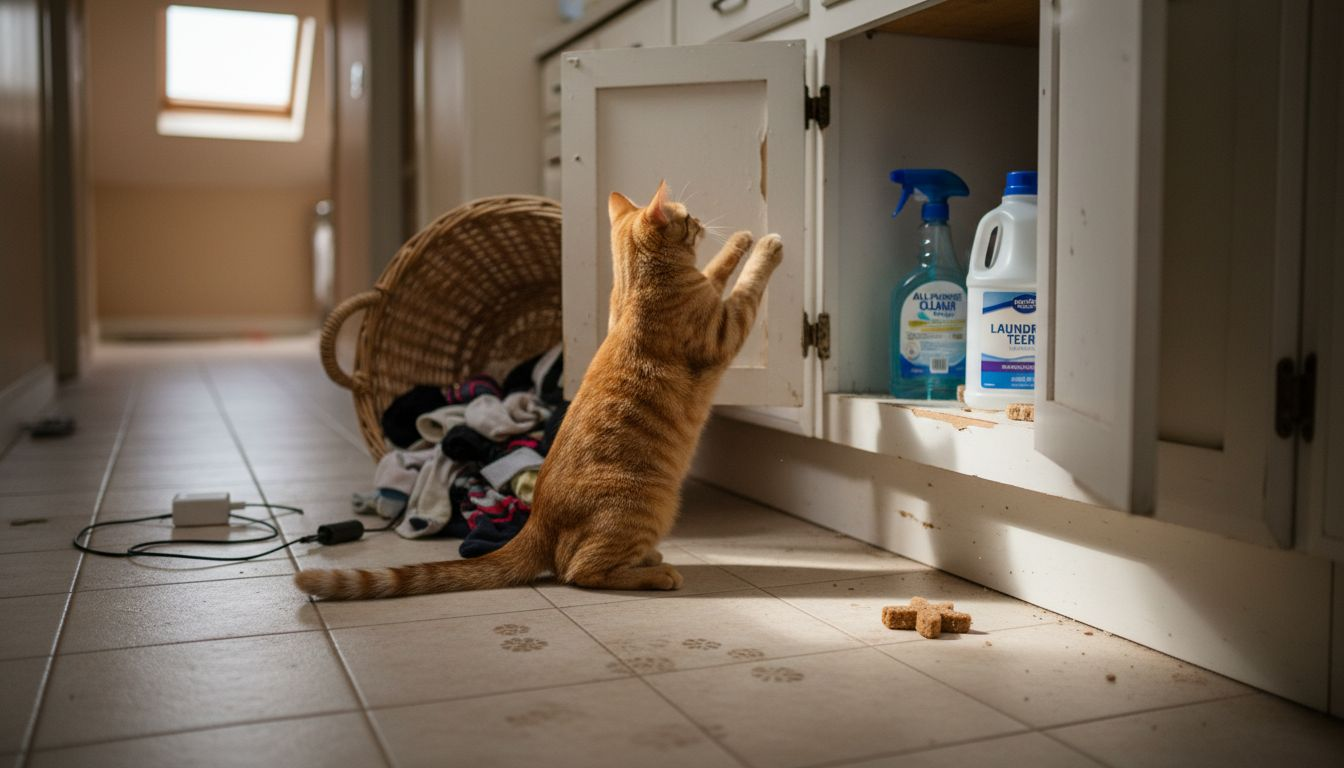
Non-edible items present equally significant dangers. Small objects like batteries, rubber bands, and plastic packaging can cause intestinal blockages or create choking risks if accidentally ingested. Even seemingly harmless decorative items or houseplants might contain toxic compounds that could seriously harm your pet if consumed.
Pro tip: Create a dedicated high storage area specifically for hazardous materials, ensuring they remain completely inaccessible to pets during all times.
How Pet-Proofing Improves Health and Wellbeing
Pet-proofing goes far beyond simple safety precautions. Comprehensive pet wellness strategies demonstrate significant positive impacts on both animal and human health, creating a holistic approach to shared living environments.
The health benefits of effective pet-proofing extend well beyond preventing immediate physical dangers. By creating a secure and thoughtfully designed living space, pet owners can significantly reduce stress for both themselves and their animal companions. Key wellness improvements include:
- Reduced anxiety for pets
- Minimized risk of accidental injuries
- Enhanced mental stimulation through safe exploration
- Improved overall household harmony
- Prevention of potential medical emergencies
Psychological wellbeing emerges as a crucial component of pet-proofing. Pets that feel secure in their environment exhibit lower stress levels, more predictable behavior patterns, and greater emotional stability. This sense of safety translates directly into improved mental health, creating a positive feedback loop between the pet’s environment and its emotional state.
Moreover, pet-proofing represents a proactive approach to healthcare. By anticipating and eliminating potential risks, owners can prevent costly medical interventions and protect their pets from unnecessary trauma. The investment of time and effort in creating a safe living space pays significant dividends in long-term health and happiness.
Pro tip: Conduct a quarterly comprehensive home safety audit, systematically examining your living space from your pet’s perspective to identify and mitigate potential risks.
Pet-Proofing Strategies for Urban Homes
Urban pet owners face unique challenges when creating safe living environments for their animal companions. Sustainable urban pet strategies require innovative approaches that maximize limited living spaces while ensuring pet safety and comfort.
Pet-proofing in compact urban settings demands strategic planning and creative solutions. Essential strategies for urban pet owners include:
- Maximizing vertical spaces with pet-friendly shelving
- Creating designated safety zones within apartments
- Securing windows and balcony areas
- Using multi-functional furniture with pet safety features
- Implementing noise reduction techniques
- Managing potential environmental hazards
Space optimization becomes critical in urban environments where square footage is limited. Pets need designated areas that provide mental stimulation, physical safety, and emotional comfort. This means thoughtfully designing living spaces that accommodate both human and animal needs without compromising functionality or aesthetics.
Environmental considerations play a significant role in urban pet-proofing. Pollution, limited green spaces, and potential toxic materials require extra vigilance. Urban pet owners must be proactive in selecting pet-safe materials, creating indoor enrichment opportunities, and developing strategies that support their pets’ physical and psychological wellbeing.
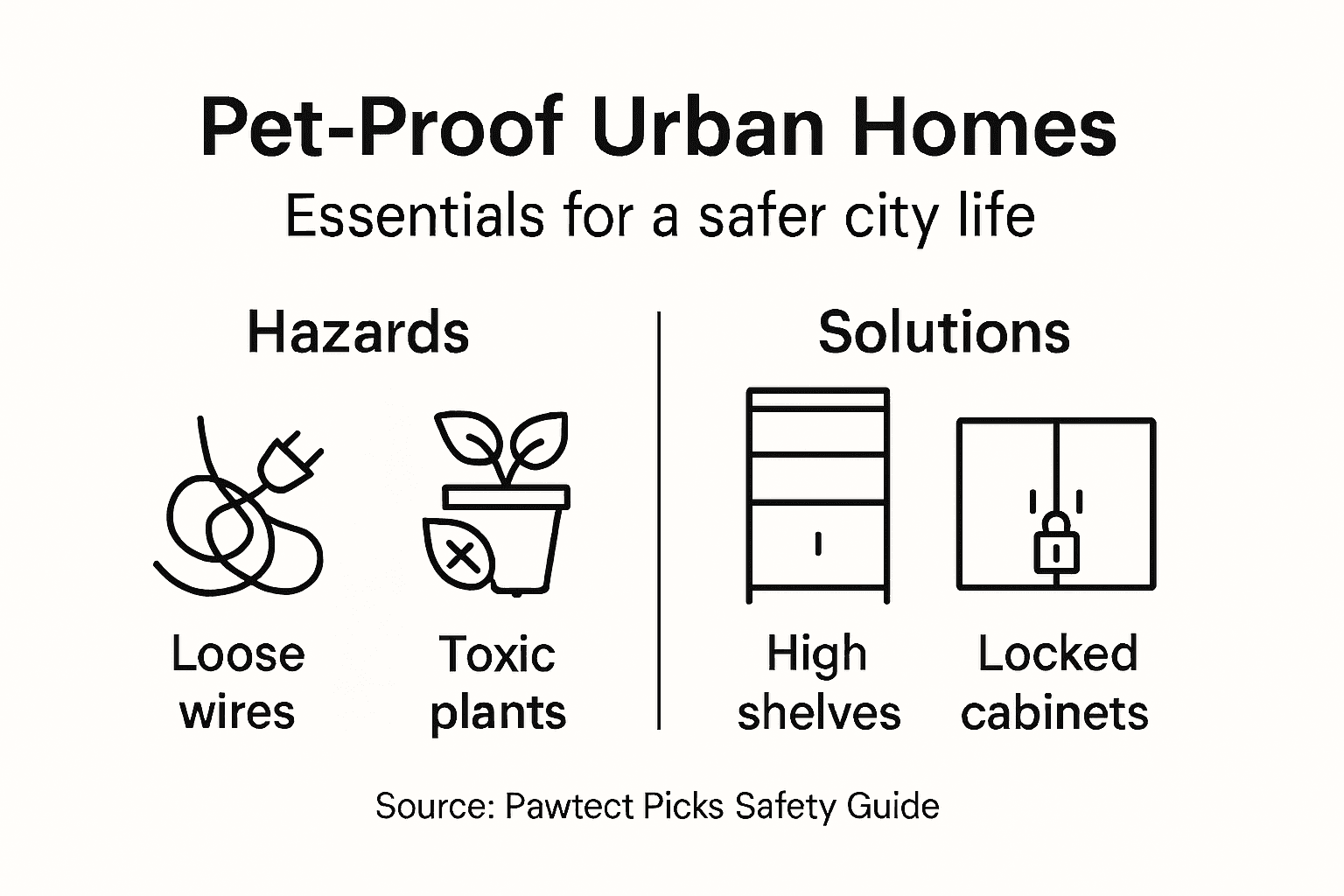
Pro tip: Conduct a monthly home safety assessment, systematically examining your urban living space from your pet’s perspective to identify and mitigate potential risks.
Compare how urban and suburban pet-proofing needs differ:
| Factor | Urban Homes | Suburban Homes |
|---|---|---|
| Space Limitations | Small apartments, multi-level | Larger yards, more open rooms |
| Outdoor Access | Limited, mainly indoors | Easier access to safe outdoor areas |
| Noise Concerns | Higher traffic and neighbors | Generally quieter surroundings |
| Common Hazards | Windows, balconies, city toxins | Lawns, garages, garden chemicals |
Risks of Not Pet-Proofing Your Space
Unprotected home environments can expose pets to life-threatening risks that extend far beyond minor inconveniences. Comprehensive hazard prevention requires understanding the potential dangers lurking in seemingly innocent household spaces.
The most critical risks for unprotected pets include:
- Electrical cord chewing leading to potential electrocution
- Toxic substance ingestion from cleaning products
- Accidental medication consumption
- Potential choking hazards from small objects
- Unintended falls from unsecured furniture or heights
- Poisonous plant exposure
- Accessibility to dangerous kitchen items
Medical emergencies stemming from preventable household accidents can result in substantial veterinary expenses and significant emotional trauma. A single moment of oversight could lead to irreversible consequences, transforming what should be a safe home environment into a potential danger zone for vulnerable animal companions.
Pet owners who neglect proper home safety measures expose their animals to unnecessary risks that can range from minor injuries to life-threatening situations. The financial and emotional costs of emergency veterinary interventions far outweigh the minimal investment required to implement basic pet-proofing strategies.
Pro tip: Create a comprehensive “danger inventory” of your home, systematically identifying and removing potential hazards before they become life-threatening risks for your pet.
Protect Your Pet with Vet-Approved Essentials from Pawfect Picks
Pet-proofing your home is about more than just preventing accidents It requires ongoing vigilance to eliminate hidden hazards like toxic chemicals electrical dangers and choking risks that threaten your pet’s safety and wellbeing At Pawfect Picks we understand the importance of creating a secure environment where your furry family member can thrive with peace of mind Our carefully selected vet-approved products support everyday care comfort and safety so you can reduce anxiety and prevent costly emergencies detailed in the article

Start transforming your home into a true safe haven today Explore Pawfect Picks for trusted solutions designed to protect your pet’s health and happiness Don’t wait for an accident take control now and create a worry-free space your pet deserves Visit Pawfect Picks and begin your journey to complete home safety and enhanced pet wellbeing
Frequently Asked Questions
What is pet-proofing?
Pet-proofing is the process of creating a safe living environment for pets by identifying and minimizing potential hazards throughout your home.
Why is ongoing pet-proofing important?
Ongoing pet-proofing is crucial because it allows pet owners to consistently assess their living environment for new risks and make necessary adjustments, ensuring continued safety for their pets.
What are common household hazards that can affect pets?
Common household hazards include cleaning chemicals, medications, toxic foods, electrical cords, choking hazards like small objects, and certain houseplants that can be harmful if ingested.
How can pet-proofing improve my pet’s wellbeing?
Effective pet-proofing reduces anxiety, minimizes the risk of injuries, and promotes mental stimulation, leading to enhanced overall health and happiness for your pet.
Recommended
- Pet Safety Checklist for Happy, Healthy Pets at Home – Pawfect Picks
- Why Non Slip Pet Bowls Matter for Urban Owners – Pawfect Picks
- Pet Product Safety Explained: Everyday Risks and Solutions – Pawfect Picks
- Certified Pet Products: Why Safety Matters Most – Pawfect Picks
- Must-Have Dog Travel Accessories For Safe Trips